Friday, June 12, 2015

It's not our responsibility to complete the task, but that doesn't mean we stop trying!

Every USY convention I ever attended included rousing song sessions.  After Shabbat dinner, Shabbat lunch, Seudah Shlishit, the bentchers would be brought out and people would compete to introduce and sing songs.  Shtick was part of the fun and stories would be told of the origins (real or not) of the various songs.  One of those songs can be connected to our weekly Torah portion.

Before connecting it to the parsha, let’s practice it together:

Lo alecha hamlacha ligmor
Lo alecha ligmor
V'lo ata ben chorin lehibatel mimena
V'lo ata ben chorin
 Sheyibane beit hamikdash, sheyibane
Sheyibane beit hamikdash, sheyibane
Bimhera b'yamenu, sheyibane
Sheyibane hamikdash

It's not for you to finish the task
But you are not free to cease trying
May the Temple be speedily built in our days
Shlach Lecha is about the sending of the spies to see the Promised Land.  Not listening to instructions, they failed at their task.  Rather than bringing the people to Israel, they caused the people to die in the wilderness.  The peoples’ obstinance prevented them from seeing the possibilities.  They let fear rule them instead of cautioning them.

Our haftorah on the other hand shows more successful spies.  They find partnership even with one whose role seems less than perfect.  Rahab was an innkeeper, but her other business was the world’s oldest profession.  The spies could have ignored her based on her reputation, but they saw that she was an honest woman, who would not betray them.  They saw through the exterior and looked at the truth within.

Knowing our Torah and knowing our Bible, the book of Joshua sees the successful conclusion of our journey.  While the book of Judges shows the conquest was complicated, Joshua teaches us that success is possible.  He also teaches that this success can be built upon the shoulders of giants.  Joshua was not Moses. He did not try to be, yet he was able to do what Moses could not--lead the people into Israel.

This lesson is just as true to us today.  We are able to accomplish so much, because of those that came before.  At our board meeting this week, we talked about our shul’s past and our future.  We discussed the values that brought us through the door and the lessons we would like to teach,  

At the end of the day, we can accomplish much, but we will not accomplish EVERYTHING we set out to do.  That’s exactly the way it is supposed to be.  It is not our job to complete the task, but we must not cease from trying!  Shabbat Shalom!

Wednesday, June 3, 2015

June article-having children isn't as easy as the birds and the bees

For the last year, I have thought about whether or not I wanted to write this letter.  Last summer we celebrated a beautiful membership BBQ.  For our family, that BBQ was very bittersweet.  That day would have been just after Rebecca finished her first trimester.  We would have shared with all of you the news of our second pregnancy and hopefully expected our second child this past February.  Yet, a few weeks before that BBQ, our plans changed, we had a miscarriage. Honestly, when Rebecca said we needed to go to the doctor, I was in denial.  Even after the doctor said that there was no heartbeat and either we were off in our calculations, or this pregnancy was unlikely to go to term, I still hoped that we just counted wrong.  Yet that night, when she was in so much pain that we visited the ER of St. Luke’s Hospital, I could no longer deny reality.  Our hope for that pregnancy to lead to a second child was over.

The next months were filled with repeated cycles of hope, disappointment and mourning.  Even as I write this, I still have no happy announcement.  Yet, we are hopeful.  After realizing that we have been hoping for another child this long and not yet been blessed, we made the decision to go through a complete fertility checkup.  Amidst a slew of invasive tests, (much more invasive for my wife than for me), we now have more hope.  We are DOING something.

I share this, even as we have not been silent about our challenges, but because in order for me to serve this congregation, I have to be authentically me.  I cannot be a good rabbi, unless I am a good Jew, a good man, a good Philip.  Each day I strive to serve the Holy One, to serve Gd, to teach Torah, and to work with Israel.  Each day, I bless Gd, even on days when I am angry or frustrated.  I also share this because of the conversations it sparks.  Mentioning the miscarriage at a service last year, a half dozen people immediately mentioned their personal or familial experiences.  Speaking of a procedure my wife endured after Shavuot, others shared their journeys of infertility, some mentioning the challenges of our holy matriarchs--of Sarah, Rebecca and Rachel.  Knowing that we are not alone, that we stand with a community, who know where we have been and know that hope is possible, is incredibly powerful.  For that, I thank you.

I regularly argue that Judaism does mourning better than any other faith tradition (or lack there of).  Through the routines of shiva, shloshim, yahrzeit, we use the support of our community and our rituals to find a sense of wholeness, even among the brokenhearted.  As I have written previously, some of our greatest rabbis have recognized that there is nothing so whole as a broken heart, that through loss and pain, we can find reserves of strength AND empathy.

While these rituals do not exist traditionally for miscarriage, I have found solace online (in Jewish blogs and articles on the subject), in my rabbi’s manual, in prayer and writing, in therapy, in the words of all of you, and in conversations with Rebecca.  At the end of this month, I will perform the wedding of a close friend, participating in that life cycle event reminds me of the joy of what I do!

Tuesday, June 2, 2015

Memorial Day, Yom Hazikaron and Yizkor--inspired by Rabbi Mark Greenspan

Rabbi Philip Weintraub
Congregation Agudas Israel
Shavuot May 2015
Pablo Picasso once was quoted as saying “Good artists copy, great artists steal.”  In my writing and speaking, I am always looking to share brilliant ideas with you.  I try to make connections between our holy texts, our day to day lives, and everything in between.  One rabbi I mention regularly, is my in-law’s rabbi, Mark Greenspan of the Oceanside Jewish Center.  This week he wrote about the connections between Shavuot’s Yizkor, American Memorial Day, and Yom HaZikaron (Israel’s Memorial Day).  Without stealing his text, I am stealing his idea, but I might have gotten there anyway on my own!
Only a few days ago, Israel observed its Memorial Day, Yom Hazikaron.  At 7PM as the holiday began, sirens were sounded throughout the country and everyone paused to remember.  Again, the next morning at 11AM, the sirens sounded again and the entire country temporarily ground to a halt.  On the radio, sad music played.  Rabbi Greenspan shared the words of Naomi Ragen:
“Remembrance Day in Israel is like nothing else, I dare say, anywhere in the world. The country simply shuts down all distractions. Restaurants, bars, and discos close down. Radio and television channels spend the day telling the stories of the fallen, showing old pictures and new videos of soldiers who died five months or thirty years ago. The programs emphasize the same thing: the person’s childhood, home, his parents,  his wife or girlfriend…for one day, every single person in Israel who identifies with the Jewish state and the lives of the people who live here feel these men and women are part of their own past, their own family.”
It is a day unlike any other.  Of course, at the end of the day, Yom Ha’atzmaut begins, and just like the Psalmist says, the mourning is turned to dancing.  The BBQs are lit and there is dancing in the street.  There is a visceral transition as people go from remembering their loved ones to realizing that those sacrifices gave (re-)birth to their nation.
In our own country, Memorial Day is a less remembered affair.  With the JWV, we planted flags in our cemetery on Friday morning.  There are parades and speeches, but most people see it as a day for a BBQ, a day off from work announcing the beginning of summer or even a day to buy a new car or grill.  While its origins from the Civil War, renewed after WWI hoped for a day of solemnity, it has become more festive than is likely ideal.
Returning to the Jewish calendar, we observe Yizkor on Yom Kippur, Shmini Atzeret, Pesach and Shavuot.  We remember our loved ones, the gift of their lives and the memories that are in our hearts and souls.  It is not a memorial day just for soldiers, but for the soldiers of life--all of us who fight daily battles to celebrate and contemplate each day.  It is for children and parents, grandparents and siblings, spouses and other loved ones.  For many, it is also the day we remember the Shoah.  Rabbi Greenspan shared the words of Rabbi Reuven Hammer on the origins of Yizkor:
Originally, Yizkor was quite different. Rabbi Reuven Hammer writes:  “Yizkor appears first during the Middle Ages in Europe, where it was recited on Yom Kippur in order to remember the martyrs slain during the Crusades. Such a memorial list was recited in Nuremberg in 1295, and the custom soon spread. Later, the practice began of saying it on the festivals as well…” There was nothing generic about the original Yizkor service. In the generations following the crusades every family knew someone or some community that was destroyed by the crusaders – Yizkor was an opportunity to remember these people. Over time the connection was lost so that Yizkor became about each generation's loved ones.
Rabbi Greenspan continues
At the heart of Yizkor is one thing: tzedakah. Yizkor is not an exercise of simply remembering but a challenge to act on our memories. In reciting the Yizkor prayer one makes an oath to give charity in memory of loved ones. Tzedakah is an act of redemption. It is an attempt to keep a person’s memory alive through good deeds. The Book of Proverbs states, Tzedakah tatzil mimavet, “Charity has the power to save a person from death.” This verse has several meanings. First, charity literally saves lives because it provides for those in need and saves them from starvation. Second, it can save us from spiritual death by investing our lives with meaning and purpose. Finally, charity saves the dead from oblivion by allowing us to keep their memory alive through good deeds.
With Yizkor’s focus on tzedekah, we really show how we commemorate the one’s we love.  By giving of ourselves in their name, we believe we help them in the world to come.  Yet in this way, we also keep them alive in our hearts and in this world.  If we support their causes, we are truly honoring their memories.

At the end of the day, each of these days that almost merge today are deeply personal.  While the national and the religious components remain, we cannot abandon the individual connection.  These moments are moments FOR US.  They are times FOR US to consider our connections.  
In my own life, I see these challenges personally.  Having recently experienced the loss of a relative I did not know well, I feel the loss of missed opportunity.  Thinking about our miscarriage last summer, I have the loss of a child who I did not get to know.  In both of these cases, grieving gets more complicated.  We mourn not only what was, but what could be.  We mourn the future, the loss that we can just barely comprehend.  Whether in these specific losses, the challenge is not the past, but the future.  We wish that we could share our children with our parents, grandparents, great-grandparents.  We wish they would have the same connections that we do, yet in these moments we see what is missing.

At the same time, coming together, we see what remains.  We see the loved ones in these rooms.  We see the people we have grown up with, grown older with, the Jewish connections that we have built over a lifetime.  We remember those who are not with us, but we gain the support of those who are here.  As we prepare for Yizkor, look around the room, share a smile, a word of kindness with your neighbors.  Chag Sameach.

Friday, May 8, 2015

Mother's Day Parshat Emor

Rabbi Philip Weintraub
Congregation Agudas Israel
Parshat Emor May 9, 2015

Our Torah reading this morning opens chapter 21 of the book of Leviticus, Vayikra, and is right in the middle of the Holiness Code.  While much of the parsha deals with the festive calendar or sacrifices, the opening deals with priests and death.  From some of your previous clergy, you might remember that some kohanim do not enter cemeteries except in very specific circumstances.  Parshat Emor opens with those circumstances.

The parsha opens:
 וַיֹּאמֶר ה’’ אֶל-מֹשֶׁה, אֱמֹר אֶל-הַכֹּהֲנִים בְּנֵי אַהֲרֹן; וְאָמַרְתָּ אֲלֵהֶם, לְנֶפֶשׁ לֹא-יִטַּמָּא בְּעַמָּיו.
1 The Lord said to Moses: Speak to the priests, the sons of Aaron, and say to them:
None shall defile himself for any [dead] person among his kin,
ב  כִּי, אִם-לִשְׁאֵרוֹ, הַקָּרֹב, אֵלָיו:  לְאִמּוֹ וּלְאָבִיו, וְלִבְנוֹ וּלְבִתּוֹ וּלְאָחִיו.
2 except for the relatives that are closest to him: his mother, his father, his son, his daughter, and his brother
ג  וְלַאֲחֹתוֹ הַבְּתוּלָה הַקְּרוֹבָה אֵלָיו, אֲשֶׁר לֹא-הָיְתָה לְאִישׁ--לָהּ, יִטַּמָּא.
also for an unmarried sister, close to him because she has not married, for her he may defile himself

Looking at most biblical texts, women are not the first mentioned.  In the Aseret Ha-dibrot, the Ten Commandments, the order is reversed:
יא  כַּבֵּד אֶת-אָבִיךָ, וְאֶת-אִמֶּךָ
--לְמַעַן, יַאֲרִכוּן יָמֶיךָ, עַל הָאֲדָמָה, אֲשֶׁר-ה’’ אֱלהֶיךָ נתֵן לָךְ.
11 Honour thy father and thy mother, that thy days may be long upon the land which the LORD thy God giveth thee. {S}

So why is a priest’s mother mentioned first? Looking at various commentaries, I did not find many comments on the order. In The Torah: A Women’s Commentary, they saw it as a literary device, noting that in verse eleven, the order is reversed to have the father first.  Elsewhere in The JPS Torah Commentary (Leviticus), they noted it as an exception to the rule saying “that in familial contexts, deference is shown to the mother.” (Levine, p. 125)  Levine continues that in comparison to the Ten Commandments when the father comes first “amount to an equitable estimation of both parents” (Ibid).  Personally, I think this is a reference to the primary importance of mothers.  Without a mother, there is no child!  In our tradition the respect and honor of our parents is not just appropriate, but a commandment!

Looking in the Talmud, Kiddushin 31b has several conversations about respecting parents.  We are commanded to respect our parents, to provided them with food and drink, clothe them, house them and transport them.  We are not to embarrass our parents--neither in public nor in private.  Even if our parents insult us, we are not to respond inappropriately.

In this country, Anna Jarvis, fought for the creation of Mother’s Day, and then fought against its commercialization.  She tried to start a boycott of florists for their price gouging and railed against the card manufacturers.  For her, the holiday was not about gifts or tokens of appreciation, but about actual recognition of those who created and sustained life.  Hearing that the average Mother’s Day gift is $170, I wondered what would really show appreciation. http://time.com/money/3838824/mothers-day-gift/ It seems that the challenge with Mother’s Day is that it is a single day.  To really show our appreciation, we must show this honor and respect throughout the year.  If we limit it to a single day, we are taking honor away from our mothers instead of adding to it!

Thinking about tomorrow, a day that celebrates mothers, I am grateful for all the mothers in my life.  I think of my wife, who spends virtually every waking hour with our daughter.  I think of my mother-in-law who blessed me with the gift of my wife.  I think of my own mom, who supported me in more ways than I can begin to imagine.  I think of her mom, whose ninetieth birthday I will celebrate tomorrow.  Then I think of the mothers no longer with us, my Dad’s mom, great-grandmothers who I just barely remember.  I look around the room and celebrate with all of you, yet mourn those no longer with us.  As we celebrate those mothers that are with us, we are called to remember those who are not here today.  

Mothers are important.  They care, nurture, provide for.  They love, protect, defend.  They come in all shapes and sizes, varieties.  Whether biological, adopted, foster, honorary, mothers are the source of their children’s lives.  Yes, fathers play important roles, but we’ll talk about them another day.  Come back in June, Dads!

I do not want to belabor my point, which is thanks and respect.  Children are grateful in moments.  They do not show respect all the time.  They do not say thanks often enough.  So to all the mothers out there, I offer my gratitude.  You helped shape your children into the people they are.  You had and have an influence.  You are appreciated, even if not frequently enough acknowledged.  Hopefully this year we will all learn the real lesson of Mother’s Day--that it is not just one day, but every day!  Shabbat Shalom.

Ottoway Medal invocation

Rabbi Philip Weintraub
Congregation Agudas Israel 5/6/15

Looking around this room, I see many familiar faces, whether from personal relationships or from seeing your names in the newspapers. (For those of you who do not know me, my name is Rabbi Philip Weintraub and for the last few years I have had the privilege of serving Congregation Agudas Israel, here in this fine city, Newburgh.)  I am proud to stand here today, in this incredible Newburgh Armory Unity Center, with the Orange County Citizens Foundation celebrating the 2015 Ruth and James Ottaway Medal Recipient, Jim Smith.  He along with so many of the people in this room do so much good for our Orange County community, and no matter our faith, religion, or belief, we all share the desire to improve our surroundings.  

I would like to offer a brief prayer.

Ribono Shel Olam, Master of the Universe, Heavenly Parent, please watch over all of us in this room.  May the food we eat remind us of the gift of our lives.  May this evening inspire us to further good works in our community.  The opening of Bereshit, the book of Genesis, reminds us that we were all created b’tzelem Elokim, in the image of GD.  Each day let us remember this as a blessing and as a command.  Let us demand of ourselves the strength to find the good in EVERY person we meet, whether they are standing at a corner asking for $1 or sitting at a beautiful dinner asking for thousands!  May we look at our community and not just pray for a time of peace between all citizens, but actively work towards it.  Most of all, let us have an attitude of gratitude.  Let us be thankful for all that has been given to us, all we have worked for, all we have earned, and recognize that everything we do, everything we have achieved is a partnership.  May this partnership with Gd, with our community, with the people at these tables continue to expand, continue to grow and most importantly, continue to improve our holy world.  Amen

Acharei Mot Kedoshim 2015

Rabbi Philip Weintraub
Congregation Agudas Israel
5/2/2015

If you were to list the most important Jewish practices, what comes to mind?  For me, Ahad Ha’am taught powerfully, more than the Jews have kept the Sabbath, the Sabbath has kept the Jews.  Others might speak about kashrut, how keeping Jews from eating with others encouraged them to socialize among Jews, encouraging Jewish continuity.  Midrash teaches us that our business practices--having honest weights and measures are central to Jewish identity--as we read this week Leviticus 19:35 “You shall not falsify measures of length, weight, or capacity. 36 You shall have an honest balance, honest weights, an honest ephah, and an honest hin.” http://www.jtsa.edu/PreBuilt/ParashahArchives/jpstext/kedoshim.shtml

This week I heard a different answer. On Tuesday, I had the privilege of listening to Shuli Passow’s senior sermon at JTS.  In a few weeks she will be ordained and will be afforded more opportunities to share her Torah with the Jewish world.  Thinking about our imperfect world, she looked at Parshat Kedoshim, the second half of our reading today.  While the Holiness code, as it is sometimes called, is frequently lambasted as being outdated or stuck up on sexual hang-ups, she taught us that it is unified by a drive towards justice and communal progress.

Citing Abraham Joshua Heschel, she taught, “The self is not the hub but the spoke of the revolving wheel.Man's Quest For God : Studies In Prayer And Symbolism (1954), p. 7.  In contrast to the culture of American individualism, Judaism is a communal culture, which sometimes requires us to sublimate our own individualistic desires for the greater good, to act altruistically.

Shuli shared the surprising practice that Maimonides saw as essential to Judaism, a commandment that does not apply outside of biblical Israel.  Leket and Peah!  These commands, which you likely have never even heard of come from  Leviticus 19:9 “When you reap the harvest of your land, you shall not reap all the way to the edges of your field, or gather the gleanings of your harvest. 10 You shall not pick your vineyard bare, or gather the fallen fruit of your vineyard; you shall leave them for the poor and the stranger: I the Lord am your God.” http://www.jtsa.edu/PreBuilt/ParashahArchives/jpstext/kedoshim.shtml

Maimonides Mishneh Torah, Hilchot Issurei Biah talks about the rules intimate relations, includes a chapter (number 14) devoted to the laws of conversion to Judaism.  For the Rambam, conversion is relatively straightforward.  He first asks:
Halacha 1
What is the procedure when accepting a righteous convert? When one of the gentiles comes to convert, we inspect his background. If an ulterior motive for conversion is not found  we ask him: "Why did you choose to convert? Don't you know that in the present era, the Jews are afflicted, crushed, subjugated, strained, and suffering comes upon them?" If he answers: "I know. Would it be that I be able to be part of them," we accept him immediately. (http://www.chabad.org/library/article_cdo/aid/960662/jewish/Issurei-Biah-Chapter-Fourteen.htm )
First we establish the connection to Jewish peoplehood.
Next we teach her some of the laws.  Not all of them, just a few.  Again, we are checking to see if they REALLY want to be part of the Jewish people.
Halacha 2
We inform him of the fundamentals of the faith, i.e., the unity of God and the prohibition against the worship of false deities. We elaborate on this matter. We inform him about some of the easy mitzvot and some of the more severe ones. We do not elaborate on this matter. We inform him of the transgression of [not leaving] leket, shichachah, pe'ah, and the second tithe. And we inform him of the punishment given for [violating] the mitzvot.
What is implied? We tell him: "Before you came to our faith, if you partook of fat, you were not liable for your soul to be cut off. If you desecrated the Sabbath, you were not liable to be stoned to death. Now, after you convert, if you partake of fat, you are liable for your soul to be cut off. If you desecrate the Sabbath, you are liable to be stoned to death."
We do not teach him all the particulars lest this cause him concern and turn him away from a good path to a bad path. For at the outset, we draw a person forth with soft and appealing words, as [Hoshea 11:4] states: "With cords of man, I drew them forth," and then continues: "with bonds of love."
Most important for today--We inform him of the transgression of [not leaving] leket, shichachah, pe'ah, and the second tithe.
Why would these mitzvot be the first ones we would teach?  It comes back to the Heschel quote, as opposed to keeping ALL of our earnings, all of our produce, as Jews, we are required to take care of those who cannot take care of themselves.  We are obliged to go against our instinct of self-preservation, of family-preservation to leave some of our earnings and give them away.  By ensuring that the people who convert to Judaism respect Jewish values, we also demonstrate what we think the most important Jewish values are!  For Maimonides, caring for others is the central Jewish value.  Like the story of Hillel and the convert, Maimonides sees Jewish values as encouraging us to improve this world and those within it.  While these specific commands are no longer applicable, the concepts behind them are.

Looking at those texts and Maimonides’ source in Yevamot, Shuli demonstrated that Parshat Kedoshim is not just a random collection of laws, but a philosophy of Judaism, a theology of love, of kindness, of support for one another.

Looking beyond the examples she made, we can look at the last verse we read this morning. “19:14 You shall not insult the deaf, or place a stumbling block before the blind. You shall fear your God: I am the Lord.”  There again we see that we are commanded to protect those who cannot protect themselves, not to take advantage of them.

Leviticus 19:16 teaches us לֹא תַעֲמֹד עַל-דַּם רֵעֶךָ Do not stand idly by the blood of your neighbor or in some translations, do not profit from the blood of your neighbor.  Jews United for Justice wrote this week that “As Jews, we have a religious obligation to treat the oppression of another group as an oppression we must also help fight. And we must balance our responsibility to support our neighbors with a reluctance to form judgments and opinions about the circumstances that are unique for other communities. We must also be careful not to compound another group’s adversity by making comparisons to our own. Ferguson, New York, and Baltimore are symptoms of America’s deep problems with racism and racial inequality in America. Shortly after Pesach, the time of our own people’s liberation, we must see this moment as a call to action against the oppression that our neighbors are currently protesting. We have a role to play in supporting their protest and actively working alongside them to make changes. Blood has been shed; we are obligated not to stand idly by.

As we look around the world today, what kind of Judaism do we want to live.  To live authentically as Jews, Shabbat and kashrut must be important parts of our lives.  Yet, they cannot be the only defining factors.  We must look out for our neighbors, here in Newburgh and throughout the country.  There is a lot of work to be done, we cannot abdicate our responsibilities!

Other referenced source:

(Once there was a gentile who came before Shammai, and said to him: "Convert me on the condition that you teach me the whole Torah while I stand on one foot. Shammai pushed him aside with the measuring stick he was holding. The same fellow came before Hillel, and Hillel converted him, saying: That which is despicable to you, do not do to your fellow, this is the whole Torah, and the rest is commentary, go and learn it."  - Babylonian Talmud, Shabbat 31a) http://www.jewishvirtuallibrary.org/jsource/Quote/hillel.html

Friday, April 3, 2015

Passover 2015

Rabbi Philip Weintraub
Congregation Agudas Israel
4/4/15

What is the first thing you think about when you think about your seder?  For too many, it might be “When do we eat?”  For many Jews, the seder is something to be suffered through.  Haggadot like the “30 minute Seder” capitalize on this.  Throughout the Jewish world, Pesach and the seder has been captured by every organization.  There are the foodie seders, the food safety seders, the anti-slavery seders, the protect Israel seders, the anti-Iran seders, the psychological/self-help seders, and many, many more.  Rabbi Mark Greenspan will be speaking this morning on just having a seder, thinking about the actual issues of the Seder--of the miracle of being redeemed from Egypt by the Holy One, by Gd.  Another of my colleagues, Rabbi Jeremy Fine, posted on Facebook,”Is anyone this year using a Haggadah that simply celebrates/recalls the Israelites Exodus from Egypt? Is it wrong that I like tradition?”

What is going on with our seders?  Are they boring because they never change?  Or have we mixed so many things into them that we forgot what a seder was?  This year our seder was different.  In previous years we have had adult seders, the part I prepared was finding interesting things to add, articles to discuss, ideas to speak about.  This year our seders are geared for a younger set, and the focus on the songs and the games that my amazing wife organized.  Either way, the theme is liberation, the goal is to remember that we were slaves.
יד  וְהָיָה הַיּוֹם הַזֶּה לָכֶם לְזִכָּרוֹן, וְחַגֹּתֶם אֹתוֹ חַג לַה":  לְדֹרֹתֵיכֶם, חֻקַּת עוֹלָם תְּחָגֻּהוּ.
14 And this day shall be unto you for a memorial, and ye shall keep it a feast to the LORD; throughout your generations ye shall keep it a feast by an ordinance for ever.
טו  שִׁבְעַת יָמִים, מַצּוֹת תֹּאכֵלוּ--אַךְ בַּיּוֹם הָרִאשׁוֹן, תַּשְׁבִּיתוּ שְּׂאֹר מִבָּתֵּיכֶם:  כִּי כָּל-אֹכֵל חָמֵץ, וְנִכְרְתָה הַנֶּפֶשׁ הַהִוא מִיִּשְׂרָאֵל--מִיּוֹם הָרִאשֹׁן, עַד-יוֹם הַשְּׁבִעִי.
15 Seven days shall ye eat unleavened bread; howbeit the first day ye shall put away leaven out of your houses; for whosoever eateth leavened bread from the first day until the seventh day, that soul shall be cut off from Israel. (mechon-mamre.org)
That last part sounds like a pretty big deal.  If you eat bread/chametz on Passover, you might as well call it a day.  Your soul has been cut off from the Jewish world, from Israel, from Gd.  It is a pretty harsh punishment, and yet Rabbi Aaron Alexander recently reminded his colleagues, me included that:
To receive the punishment of karet one has to:
a) Eat a significant amount (olive's worth) of full fledged hametz (not a mixture).
b) do it with intention to sin, be-meizid. (See MT, Laws of Hametz, 1:1-7)

That puts a different spin on it.  Eating chametz on Passover is something we DO NOT do, yet to get the most severe punishment, we must do it intentionally and demonstrably.  It must be a clear, intentional act, as opposed to eating a product that might have a trace amount of something mixed in.  Of course, our goal on Passover is to observe as perfectly as possible, to skip anything that has any ingredients that are even questionable, yet our Jewish lives are not ruined if we make a mistake!

Returning to our seder, I think we have both problems I opened with.  For some of us, we spend so much time trying to make the seder new and innovative, we can forget the original words of the Seder!  Others who do the same thing every year, may simply get bored.  We may become like the wicked child, saying this happened to YOU and not to me.  They forget that the wise child used similar language, YET she also included herself.  She asked what did OUR Gd command to all of you, asking for the specific details, demonstrating her interest in the proceedings and her identification with the command that we should see ourselves as escaping Egypt ourselves.  To truly celebrate the Pesach, we must have some interest in the proceedings.

On the bottom of page 115b of Talmud Pesachim, the Talmud asks “Why do we lift up/remove the table?”  Rabbi Yannai responds “SO that the children will notice something strange and they will ask (why is this night different?)”  In our Haggadot, that is when we lift the Seder plate.  Our rabbis did not lift the plate--they lifted the whole table!  Now that would raise some questions.  They were trying to do something different, to spark discussion, and we have codified and ossified it.  In order to make our sedarim meaningful, we have to change things up from year to year.  Use a different Haggadah tonight, ask some new questions. Don’t do the same things two days in a row.  Use the AIPAC/RAC/TRUAH/MERCAZ/Elijah’s Journey seder supplement, but don’t stop there.  Don’t totally ignore the rest of the material.

Do things to lighten the mood and prepare.  Pesachim 108b/109a says we give roasted grains(kosher for passover) and nuts before the Seder, so that they will stay awake to ask the four questions.  Men should enjoy the wine, women should get new clothing for the holiday.   One commentator even says the men get wine so they don’t worry about paying their Passover-incurred debts!! Whatever the reason, your seder should have at least some moments of levity!  While freedom is a serious subject, it doesn't mean the entire evening should be dark.

The Seder itself is a journey based on educational theory.  It is experiential.  It helps us to truly see ourselves in the shoes of our ancestors.  Within the haggadah there is a debate about the thrust of the seder. Are we talking about freedom from slavery? Or the shift from idolatry to worshiping GD?  The seder has so much choreography because it is about getting us out of our normal routines.  Yet, even if our seders are the same every year, we are still telling the story, our story.  Reminding ourselves of our family history, of our highs and lows and that both are natural parts of life is an important lesson for all of us.  Every one of us has good and bad times in our lives.  The seder reminds us that it gets better.  (And also that it can get worse.)  In every generation there have been those that wanted to destroy us, but in every generation with Gd’s help, with our own help and with the help of righteous gentiles, we have overcome.

So change your seder every year--or keep the same family traditions every year.  Read Maxwell House or buy an expensive Haggadah.  Whatever you do, have another seder tonight.  The second chance is your opportunity to do things differently.  If the first seder stays the same, change the second or vice versa. Don’t be bored, embrace your history.  Tell your story.  How did you family get here?  How did our ancestors escape Egypt?  Where in the world is redemption needed?  By upholding our traditions AND introducing new ones, we can truly be liberated, in every generation. Then you can have your Passover cake and eat it, too!

Friday, February 13, 2015

Stand up and be counted

Rabbi Philip Weintraub
Parshat Mishpatim/Shabbat Shekalim 2015
February 14, 2015
Congregation Agudas Israel

What is the first thing that comes to your mind when I ask you what today is?
Shabbat?
Valentine’s Day?
Simchat Shabbat?
Day of Rest?

I think this week’s parsha and haftorah may actually connect all of those days.  I think it integrates the ideas of law, love, accountability and asks us all to stand up and be counted.  If you were following along as I read the Torah, you may be wondering exactly how these disparate ideas come together?

When we celebrated Shabbat dinner last week, I mentioned the Midrash from Genesis Rabbah.  Rabbi Noam Zion from the Hartman Institute helped me find the specific citation!
The Midrash Genesis Rabbah 11:8 attests to the love affair between Israel and the Sabbath by likening them to husband and wife. According to this Midrash, God paired all the days of the week: Sunday had Monday, Tuesday had Wednesday, Thursday had Friday. Only Shabbat was left alone. (p.102)
The Sabbath came before the Holy One and said: “Sovereign of the Universe. All the other days have a mate; am I to be without one?”
The Holy One said to it: “The Community of Israel shall be your mate.” As it is said, “Remember the Sabbath day to sanctify it le-qaddesho [here read]: to betroth it [as in kiddushin].” (Ex. 20:8)

What a beautiful image of Shabbat marrying the people Israel. The metaphor is expanded by a medieval Kabbalistic rabbi:

Rabbi Yisrael Elnekaveh quotes a Midrash that develops an extended marital analogy:
Just as the Kallah arrives before the Hatan, dressed beautifully, with jewelry and perfume,
So Shabbat arrives before Israel dressed beautifully with jewelry….
Just as the Hatan is dressed in magnificent attire, so a person should dress magnificently for Shabbat.
Just as the Hatan enjoys pleasures all seven days of the wedding,  so a person should indulge in pleasures on Shabbat.
Just as the Hatan takes off from work, so does person refrain for work for Shabbat….
One should not eat on Shabbat afternoon so as to enter Shabbat with an appetite,
just as the Hatan fasts from food and drink on the day of the wedding.
So a person should be very careful to sanctify Shabbat with wine,
Just as Hatan is careful to sanctify (kiddushin) his bride [with wine].
(Sefer HaPeliah I 36b)
http://hartman.org.il/Blogs_View.asp?Article_Id=1431&Cat_Id=275&Cat_Type=Blogs
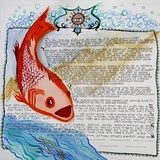
In other texts, the image is expanded to say that it is not just Shabbat that the people Israel marry, but rather GD!  Innumerable texts compare the Torah to the ketubah and in many Sephardic communities, on the holiday of Shavuot, there is a special ketubah read celebrating the marriage of Israel to Gd.  This concept is reinforced on a daily basis through recitation of verses from Hosea 2:21-22 when we put on Tefillin.  The entire book of Hosea emphasizes this relationship, reminding the people Israel that there was no Get, that Gd did not divorce or abandon Israel, even as our ancestors strayed and worshiped idols.

In an image I have mentioned before, marriage is a contract between two people and the Holy One.  We promise to provide for the needs of one another, to treat each other with a certain level of care, and in a Jewish marriage, to acknowledge that these commitments are spoken before GD.  Strangely, in secular culture, these obligations are not always the priority.  Many in this country think that defending marriage is about preventing some loving couples from being married, rather than in recognizing the sacredness of their own relationships!  Some even neglect their own spouses while denying the marriages of others?  

Marriage is a covenant, with laws and obligations.  Whether those are around food, clothing, intimacy or putting the dishes away, the rules of marriage are many.  Yet these rules are an expression of love.  In the same way, the Torah is a gift BECAUSE of the laws, NOT DESPITE THEM!

Some Shabbat mornings we sing from Psalm 19:

 תּוֹרַת יְהוָה תְּמִימָה, מְשִׁיבַת נָפֶשׁ;    עֵדוּת יְהוָה נֶאֱמָנָה, מַחְכִּימַת פֶּתִי.
8 The law of the LORD is perfect, restoring the soul; the testimony of the LORD is sure, making wise the simple.
ט  פִּקּוּדֵי יְהוָה יְשָׁרִים, מְשַׂמְּחֵי-לֵב;    מִצְוַת יְהוָה בָּרָה, מְאִירַת עֵינָיִם.
9 The precepts of the LORD are right, rejoicing the heart; the commandment of the LORD is pure, enlightening the eyes.
http://www.mechon-mamre.org/p/pt/pt2619.htm

These laws keep us accountable.  In our parsha this week, we follow the sacred moment of the Giving of the Torah, the Revelation, with all sorts of little details.  Yet it is in these details, that the most holy moments are found.  We are commanded to help the animals of our enemy.  If we live in a time when slavery is allowed, slaves must be treated with respect and not overburdened--they must even be paid.  Lex talionis--an eye for an eye is mentioned, yet the rabbis teach us that it was NEVER taken literally.  Instead financial compensation for compensatory AND punitive damages were required.  The laws teach us how to be holy people.  It is not just the words here, but how they have been applied from generation to generation.  The Torah is the start, but it is not the end.

The Torah is renewed in every generation.  We all stood at Sinai and we remain there today.  Just as we recently read about Gd freeing us from Egypt, on Pesach we will re enact it.  We must act as if we were there ourselves--because we were.  As such, this Shabbat is a special one.  Shabbat Shekalim tells us that Adar is soon, that it is almost time to rejoice with Purim, but it also tells us to stand up and be counted.  The special Maftir and the Haftorah tell of the half-shekel that served as the census of the Jewish people.  Counting Jews was not something Gd approved of directly.  Instead, we count through donations and math.  In this census, each individual (male Jew of military age) donated an equal amount.  Whether rich or poor, everyone contributed equally.  Elsewhere free will donations were accepted to the best of one’s ability, but for this, every single person gave the same.  Every single person’s contribution was as important as anyone else’s.

Today, as we stand on the threshold of our new addition, every person’s contributions are valued.  We have not asked for a standard contribution, but we have asked everyone to contribute something.  I would like to see a second thermometer outside, not with money, but with participation.  When every single person has given something, then this community will be a successful one. This is a twofold statement.  To support our community now means to support Kol Yisrael, to ensure this home is outfitted to our needs.  Yet it also means to support CAI, to ensure that we have the programs and the religious leaders that we want.  That is my soft sell campaign.  Traditionally, Shabbat Shekalim was a time when Jewish communities asked their members for support.  Last week I reminded you to stand up and participate, this week I ask you to stand up and contribute.

Without reading or seeing 50 Shades you should now understand, that love and law are the same and demand accountability--stand up and be counted.