Showing posts with label blessing. Show all posts

Tuesday, February 28, 2017

Jewish values in a challenging time

What are our values?
What do we care about?
Our history and texts teach us that there are multiple paths to annunciate and demonstrate what we care about.  We can write, speak, march, do, listen, care, spend money.  Some say actions are louder than words, while others focus on the power of the pen (or keyboard).

In our morning prayers, we do not just bless the Holy One for the gift of Torah, but rather say:
Barukh atah Adonai Eloheinu melekh ha’olam asher kid’shanu b’mitzvotav v’tzivanu la’asok b’divrei torah.
Blessed are You, Lord our God, Master of Space and Time, who has sanctified us with commandments, and commanded us to be occupied with words of Torah.

The word “la’asok” is key here.  Translations vary from study, to be occupied with, to practice, to engage with.  Regardless of how we translate the word, it is one that demands action.  It is an active word imagining us wrestling, fighting with, engaging with the texts.

Our texts debate which is more important--action or study, with strong arguments on each side.  One of the most popular of those debates in the Talmud ends with the command that we study--for it leads to action.  (See for example: http://www.myjewishlearning.com/article/learning-amp-doing/)

For me study is a gift.  It is time to consider our past, present and future.  It is a way to see the conversations that are relevant today have been with us for generations.  The Torah teaches repeatedly about caring for the stranger, widow and orphan--those who need a little more help.  The Talmud teaches about the importance of freeing slaves and redeeming captives--knowing that the world is not perfect and we can be both oppressor and victim.  Our identities are not static, but ever changing.  Our choices make all the difference.

This week has made me very antsy.  Hearing reports of cemeteries desecrated, of JCCs and Jewish centers and schools having bomb threats, I wonder how I can most actively contribute.  Donations are wonderful, but how can we prevent future attacks?  How can I be a voice for calm and reason when I, myself, am frustrated?

So I have made phone calls to my elected officials.  I have thanked my local police officers. I lock my doors and set the alarm, yet I also make sure that I remain active in community events. I have recommitted myself to study.  I pray that my study will lead me to further action.  What will you do next?

Tuesday, November 29, 2016

Kol Nidre 5777: Counting our blessings

Rabbi Philip Weintraub
Congregation Agudas Israel
10/11/16

Four years ago yesterday, I was telling my wife that if she could have held our daughter inside just one more day, H could be born on 10/11/12.  My love did not find it nearly as amusing as I did.  Yet, numbers, gematria, have a long history in the Jewish world.  Today I think about another anniversary.  Fifteen years ago, on September 11, our world changed.  Occurring just six days before Rosh Hashanah, the terrorist attacks sent rabbis scrambling, forced to rewrite their holiday sermons, forced to confront the reality of evil in a world where it had seemed vanquished.  

The horrors of the collapse of Yugoslavia, the violence and Bosnia genocide there was just six years before; the Rwandan genocide was just a decade before.  In some ways, it felt a more innocent time.  CNN had been around for twenty years but Foxnews had not even seen a decade.  You could go to an airline gate with barely an ID check, hang around an airport and watch the planes take off, or even chat with a pilot during the flight.  You didn’t have to take your shoes off and you could carry a soda or water from your car all the way to the airplane. Heck, you could show up 10 minutes before the flight and probably still make your plane.

While the lesson that evil still exists was the one that resonated with most people, there was another side, too.  The Red Cross had to stop accepting blood, because their banks were all full.  People spent weeks and months working “the pile” trying to save anyway left and then later to make sure that families could have as proper a burial as they could.  

What have we learned in the last fifteen years?  

This year we flew to Atlanta on September 11.  I have to say, I was a little concerned.  It was actually one of the most uneventful and fastest security experiences we had at Newark.  My wife even got precheck and was able to leave her shoes on!  With the privilege of modern air travel we were able to welcome our newest niece into our family.  What a mitzvah to celebrate the birth of a new child.  There is nothing more optimistic in the world that looking into the potential of a newborn.  Seeing the tiny fingers and toes, we cannot help but take a breath and give thanks for all that is good in this world.  

It seems like we all need more reminders to give thanks, although there is much more work to be done.  Looking around the world, there are so many places with seemingly endless strife and unrelenting conflict.  The war in Syria is getting worse and worse.  In Afghanistan, we have faced the same challenges the Russians had decades ago and the British had a century before.  Russia is getting more and more totalitarian--and don’t even get me started on this election.  

Yet the big question I have is why are we so afraid?  
Our economy is much better than it has been.  Gas prices are lower than they have been in years.  Grocery costs are down.  Electronics are cheaper, too.  Car technology has improved tremendously.  Healthcare is still a mess, but more people have insurance--it might be more expensive but it covers more conditions--especially in New York.  After quite a runaround, my love got new hearing aids, mostly covered by our insurance company!  Consumer confidence is up to some of its highest levels, yet there is a feeling of unease.  For a little while we worried about police being killed, but those numbers are still down by a third from the early 80s and have continued to drop.  As long as you weren’t murdered in the spike of killings in a handful of cities this year, overall violence and violent crime is way, way down.  Unlike Australia, we still have a problem with school shootings, but overall, we are very lucky to be alive right now.  For many Americans, this year finally, finally saw some real wage growth.  Are we trying to return America to some ahistorical moment of greatness or steadily build a future that has opportunities for ALL.

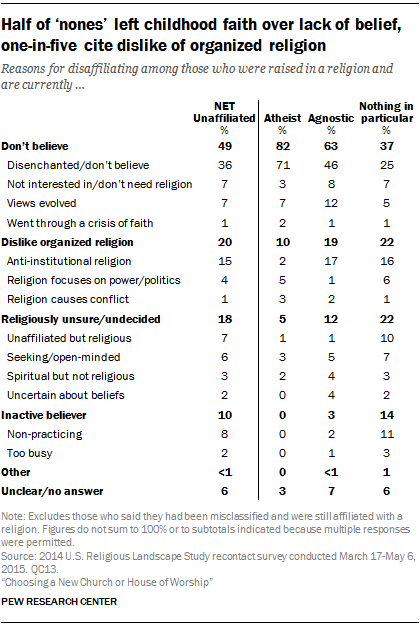
As Jews, we can always find things to worry about--our children, our Jewish future.  We definitely have a lot of work to do.  Synagogue memberships are down across virtually all denominational lines.  Yes there are hot spots of growth, growing cities where more are connected, and ultra-Orthodox groups where extremely large families are the norm, but affiliation is down across EVERY religion.  Catholics and Protestants are also mourning the growth of the nones--unfortunately we are not alone.

So many are “spiritual but not religious”.  They don’t believe in organized religion, but they are searching. I like to remind people that Judaism is a “disorganized” religion, but a little humor doesn’t solve every problem--it helps--and as I mentioned on Rosh Hashanah, might even help get you into heaven.  But seriously, why don’t the spiritual searchers not find us?  What can we do to make our community more engaged, our services more exciting?  Websites and books promise to deliver the secrets to get millennials and other young people more involved.  I’ll tell you a secret.  There are no secrets.  
The answer is simple, but slow.  We must love what we do.  We must feel that it is important.  If we see our faith, our Jewish practices as unimportant, so will those around us.  If we want others to take us seriously, we have to take it seriously, too!  If we love our shul, we will tell our friends and family.  In some ways being a part of a community is like being in a relationship.  If it is exciting we tell all of our friends.  They might occasionally get nauseated at how often we talk about it, but our passion is contagious.  Yes, we need to advertise and try new things.  Rabbi Freedman and I put out a radio ad this high holiday season.  I made a new website for that promotion and am working on a new website for the shul--there is a draft out that you might have seen!  In the last few years, we have been successful here.  Overall numbers grow and shrink--we can increase new members but cannot eliminate death or moving away.  

The question I like to ask myself is what numbers do we use to measure success?  We live in the age of numbers, of big data, but what does data tell us about a congregation?  It may tell us if the budget balances or the number of people that come to particular program.  But does it tell us whose life was changed by coming to a service?  Does it tell us the member who felt overwhelmed with grief and then overwhelmed with love when we filled their home or this shul to sit shiva with them?  Does it tell us of the college student who received a call or text or letter from us and was inspired to participate in Hillel?  I don’t think I’m trying to preserve the rabbinate as a profession, but I define success by inspiration rather than numbers--souls rather than dollars.

Looking at our history--we must think the same way.  We have always been a minority of a minority.  From generation to generation we struggled to survive, to hold our faith and our place in so many societies.  From the Destruction of the Temple and Rome’s eradication of Israel, we did not have a permanent home until almost the present.  We were dependent upon the hospitality of host nations--that were not always enthusiastic to have us.  In 1948 we turned a dream into a reality, the State of Israel.  Like our own reality, it is imperfect.  It must learn about the separation of synagogue and state, how to better welcome refugees, how to create opportunities for all its citizens and what a lasting peace will look like.  At the same time, it has made the desert bloom, produced more NASDAQ companies than almost anywhere else, invented parts of every modern technology and created its own Silicon Valley.  Next June, join me for the trip of a lifetime, connecting your past to our shared present, your history to our Jewish future.  Flyers are in the hallway and I hope that you will take your entire family and join mine--if my parent’s come, my little ones will come, too!  (I know that it an incentive for a few of you on the fence.)

Judaism is not just about history, but the present.  We use our history and our Torah to teach the most important of values.  Tomorrow afternoon, Rabbi Freedman and I will be using texts from HIAS to discuss the struggles of refugees around the world.  From their website:
Founded in 1881 originally to assist Jews fleeing pogroms in Russia and Eastern Europe, HIAS has touched the life of nearly every Jewish family in America and now welcomes all who have fled persecution.
The Universal Declaration of Human Rights, as well as the 1951 Refugee Convention became the basis for U.S. asylum law, giving HIAS the basis for all future work to assist refugees no matter where they were.
  • 1956 - HIAS assisted Jews fleeing the Soviet invasion of Hungary and evacuated the Jewish community of Egypt after their expulsion during the Sinai Campaign.
  • 1959 - HIAS set up operations in Miami to rescue the Jews fleeing Cuba’s revolution.
  • 1960s - HIAS rescued Jews from Algeria and Libya and arranged with Morocco's King Hassan for the evacuation of his country's huge Jewish community.
  • 1968 - HIAS came to the aid of Czechoslovakia's Jews after the suppression of "Prague Spring" and to Poland's Jews after pogroms racked that country.
  • 1975 - Following the fall of Saigon, the State Department requested HIAS’ assistance with the resettlement of Vietnamese, Cambodians, and Laotians. That year, HIAS found new homes for 3,600 in 150 communities in 38 states.  While not the first time HIAS had assisted in the resettlement of non-Jews, the organization’s assistance with this large-scale refugee crisis garnered a special thank you from President Gerald Ford. HIAS continued to assist refugees from Southeast Asia through 1979.
  • 1977 - HIAS helped evacuate the Jews of Ethiopia, which culminated in several dramatic airlifts to Israel.
  • 1979 - The overthrow of the Shah precipitated a slow but steady trickle of Jews escaping the oppressive theocracy of Iran. HIAS helped hundreds of Iranian Jews with close family living in the U.S. resettle here.
  • Hias helped with Jews from the former USSR.
Starting in the 2000s, HIAS expanded our resettlement work to include assistance to non-Jewish refugees, meaning we became involved in the aftermath of conflicts from Afghanistan, Bosnia, Bulgaria, Czechoslovakia, Ethiopia, Haiti, Hungary, Iran, Morocco, Poland, Romania, Tunisia, Vietnam, and the successor states to the former Soviet Union. We began to work in countries where refugees fled to identify those in immediate danger to bring them to safety. We realized that there were many refugees who would not be resettled and that it was important for us to help.
Today that means working with Syrian refugees--a conflict that has taken the lives of hundreds of thousands and created millions who cannot return home.  As Jews, we know what that is like.  In the coming weeks, we will have more opportunities to discuss this.  I would like us to sign on to HIAS welcoming congregations list and perhaps even adopt a family.  More to come as information is available.
Tonight we have crossed back and forth across Jewish history, from past to present, looking closely and more distantly at numbers.  Tonight is the one night a year when we wear a tallit, so I want to close with some numbers about the Tallit’s fringes:
While there are several different numerical interpretations of the tzitzit, the one I like best is the Gematria value of the word "Tzitzit" itself--(tzadi-yod-tzitzit-yod-taf) is 600. Since each corner has eight strands and five knots, making 13, looking at any corner reminds us of the number 613.  With 613 commandments/mitzvot, holding any corner is the same as holding the entire Torah, holding all of our tradition, showing us a physical connection to our past and present.  Discussing the tzitzit, the Torah says, "You should see them and remember all God's commandments and do them." (from the last paragraph of the shema).


However we count our fringes, let them be a reminder to us of our connection to our heritage, to God’s commands, and to the possibility of changing the world for the better.  We are not alone, God is with us, and we should work to inspire one another and those around us to living with that holiness.

Tuesday, September 20, 2016

Parshat Ki Tetzei: What's a mitzvah? What's our mission?

Rabbi Philip Weintraub
Congregation Agudas Israel
9/17/16

How do we unite a list of disparate laws?
How do we unite a group of disparate people?

The answer is simple: We work towards shared purpose.  We work towards shared mission.

In our Torah, the mission was reaching Israel and building a new community.  Whether discussing the treatment of criminals, how to fight fairly, conduct business ethically, uphold societal norms, take care of the environment or remember the evils of Amalek, the 74 mitzvot found in this parsha focus on: teaching the people Israel how to live in Israel, morally, ethically, responsibly.

The rabbis are nervous about giving reasons and justifications for mitzvot.  If we know a mitzvah’s reason and origin, we are more likely to justify it away if the circumstances seem different.  For example, if we were to say that the prohibition on pork was to prevent trichinosis, does it apply when we have reliable ovens that can cook food thoroughly.  As Conservative Jews, we do not discard mitzvot willy-nilly, we know that kashrut--or at least avoiding pork, is a sign of Jewish identity, a covenant with God, a daily reminder of holiness through our eating choices.  As such, we have no need to discard the law, simply because one of its original rationales no longer applies.

There are numerous works on the rationales of mitzvot--some quite inspiring.  We speak about mitzvot as pathways to God, as ways of bringing holiness into our lives, as organizing principles.  I think about Steve Jobs wearing the same black turtleneck and jeans every single day--taking away some unnecessary choices gives us more creative energies for the rest of our day.  Taking time to pray and meditate, to thank God for the gifts of our lives on a regular basis makes us feel better.  So why do we have such a hard time with being told what to do?  Why do we as Americans put up such a fight about organizing our lives and our calendars according to someone or something else--GOD?

Powerfully, when we work on mitzvot together, we quickly build a community.  As Gil Troy, a Mcgill Professor and historian has argued: While some may say schwer zu sein a yid, it’s hard to be a Jew, when those outside our community look in, they sometimes say Mah Tovu ohalecha Yaakov--how wonderful are your tents o Jacob!  The organzing principles of our faith are not about faith at all--they are about action.  They are about getting together and building a cemetery, a school, a synagogue, finding kosher food.  When we were together on these endeavors, we find that common purpose. (http://www.myjewishlearning.com/article/no-it-is-not-that-hard-to-be-a-jew/#)

The challenge sometimes is what happens AFTER the building is done?  How do we keep working together?  The answer is simple--use our mitzvot as a guide.

The mitzvot in this parsha are not all about ritual.  They are not all about prayer.  They are about the details of living in a unified and cooperative society.  Ensuring justice, fairness, being decent people. One might argue many more of them are universal and not just for Jews!  As my colleague and friend, Rabbi Mark Greenspan said this week,
“I would suggest that while one doesn’t have to be Jewish to be a good person, one can't be a good Jew without being a good person. Goodness is the bottom line. Justice is the measure of being God fearing. Rituals mean nothing if they are not based on a solid foundation of compassion and goodness.”

What is unique about the Jewish tradition, something I bring up regularly is that the ritual and the interpersonal commandments are intertwined and interrelated.  We are not completely fulfilling our destiny as Jews if we ignore one or the other.  I love to remind us of the mitzvot ben adam l’havero, between individuals, because we need to know that we are already following most of the commandments.  Yet we cannot forget the mitzvot ben adam l’Makom, between humanity and God.  If we ignore the rituals all together, it does not make us half-Jewish, but we have lost an opportunity to connect.  Once again, I preach to the choir--you are all here--you are choosing to be part of and not apart from community.  By being here, you are demonstrating the importance of prayer and mitzvot in your lives!

Looking at various mission statements out there, the ones I like best return to recognizing the various combined goals of a synagogue.
  • A house of prayer: aiding our members in a search for meaning in life, fulfilling the spiritual needs and longing of our Jewish community, providing a path that brings us closer to each other and to G-d;
  • A house of study: supporting and fostering a community dedicated to Jewish knowledge, learning and living;
  • A house of assembly: creating a welcoming home and sense of family for our members.
  • An integral part of the foundation of K'lal Yisroel, the Jewish people, supporting Israel and all good causes with support, both financial and otherwise.

In short, the way we become a community is by choosing to make ourselves one--by working together to uphold the values of God, Torah and Israel, living the mitzvot both ritually and communally.

Wednesday, September 7, 2016

Elul day 4--Can I be joyful today?

Today is the 4th day of Elul.  In less than a month it will be Rosh Hashnah.  We blow shofar now to wake us up and remind us of the imminence of the Holy Day, but what about the most holy of days--the one that is NOW?
What if we recognized the holiness of TODAY?
 
What is special about today in your life?  
What are you thankful for?  
Who have you helped today?  
Who have you asked forgiveness from today?  
For whom have you prayed for healing today?  
With whom have you given or received a hug?


THIS is the day that God has made, let us celebrate and rejoice in it - “Zeh hayom asah Adonai, nagilah v'nismecha vo”


Right now I stand on the precipice with a loved one in surgery.  As I pray for healing, I look forward to hearing good news this evening, but where can I find joy RIGHT NOW?  


It’s time to relieve the babysitter and spend the afternoon with my almost four year old daughter after her first day back at school.  Today and everyday, I hope I am as grateful for the time to share with her!  Love to all.

Friday, August 15, 2014

Eat, be satisfied, and thank Gd, Eikev 2014

Rabbi Philip Weintraub
Congregation Agudas Israel
8/16/2014

Technology is a funny thing.  It helps us in so many ways, yet slows us down in others.  Looking at this week’s parsha, I realized there were topics I did not want to discuss, and topics I did, most specifically Chapter 8, vs 10  10 “When you have eaten your fill, give thanks to the Lord your God for the good land which He has given you.” (NJPS translation from http://learn.jtsa.edu/content/translations/eikev/torah-portion/eikev )
  וְאָכַלְתָּ, וְשָׂבָעְתָּ--וּבֵרַכְתָּ אֶת-י--ה-ו--ה אֱ--לֹהֶיךָ, עַל-הָאָרֶץ הַטֹּבָה אֲשֶׁר נָתַן-לָךְ.
I knew that I had written about that verse, about the Talmud’s extensive discussion, but did not know when/where.  I scrolled down through pages and pages of tweets on twitter, eventually reminding myself that the Talmudic source for Grace after Meals is in Talmud Brachot 47 and following.  I searched my google drive--my old sermons in the cloud--and found from Rosh Hashanah 2012 the following:
Today’s study, p. 47, is in the seventh chapter, which mainly discusses Grace After Meals.  Just as the Gemara connects one story to another, this section reminds me of a story in my own life.  I was once finishing a lunch in the food court of a mall in Jerusalem.  Sitting with me was an Orthodox rabbi I had known in college.  As we prepared to say the Grace After Meals, he wondered aloud about people’s quest for spirituality.  He said he could not understand how some Jews described themselves as “spiritual but not religious” but that many of those very people did not say Thanks to Gd after they ate.  He said “How can you take the great blessing, that is eating, being blessed to have enough to eat in such an insecure world and NOT thank Gd for such good fortune!”  I was glad he spoke rhetorically, since I had no good answer to his challenge!  It made me think about my own difficulty in saying Birkat Hamazon, Grace after Meals, regularly, and he thus encouraged me to say it more often.
For us today, this is a great lesson.  Elsewhere in Brachot, it says that one of the reasons the Jews merited the land was that they blessed Gd even when they were NOT satisfied with their food, with their portion.  It is hard enough to offer thanks when we are satisfied, but to find it in our hearts to appreciate Gd when we do NOT have enough is even more challenging.  Returning to Rosh Hashanah two years ago, I wrote about the
the 47th daf/page of Brachot.  On that page I will see conversations about waiting for others to be served and bless their food before eating; when to say “Amen” to the blessings of others; how much food a waiter needs to eat to join a group who would like to say Grace after meals; the fact that a convert is not Jewish until he/she has gone to the mikvah (ritual bath); and can you have a minyan of 9 plus a Torah?  As you can see, some of those subjects are clearly related to Grace after Meals and others seem like tangents, but very interesting ones.  For more details, you’ll have to look at it yourself.  
The Talmud regularly demonstrates associative thinking.  Like many of us, it starts discussing a topic, then gets sidetracked.  For some modern thinkers, this is incredibly annoying--why can’t they just stick to a topic, but for others, the side notes are what they are coming for, those little pictures of Talmudic life, of Judaism in another era.  Yet, how many of us do exactly the same thing.  We are telling a story about our hilarious uncle, and then rather than finishing the story, we tell three others before getting back to the point.  On a side note, the books of Midrashim, Genesis Rabba, Sifra, Sifrei, include many early rabbinic sermons.  They start and end with a verse and tell many other stories in between--with the goal being to create a web of connections bringing you from the beginning to the end.  When Chasiddic rebbes would teach on Shabbat, this style was also very common, starting with a verse from the parsha, touching here and there and everywhere in rabbinic literature before coming back to the original to teach a lesson or a principle.   In some ways we have changed, in others we have stayed the same.
The real reason I shared this verse
וְאָכַלְתָּ, וְשָׂבָעְתָּ--וּבֵרַכְתָּ אֶת-י--ה-ו--ה אֱ--לֹהֶיךָ, עַל-הָאָרֶץ הַטֹּבָה אֲשֶׁר נָתַן-לָךְ.
was because of Robin Williams.  In the last couple days we have heard the story and the challenges of a man who struggled with addiction, with depression, with his own inner demons, yet managed to fight through all of that to teach poignant lessons to us all, to bring a light, a laughter, a humor to so many people.   He once joked “I went to rehab in wine country, just to keep my options open.”  His humor was incredible.  His openness to his struggles brought help to many.  I heard on the radio of his own openness to discuss therapy and the years that it brought him, the way it changed his life for the better.  As such, he was an inspiration for so many.  I pray that his death will encourage people to get the help they need.  All of us need the support of each other--one of the things I mentioned on Tisha B’Av.  Yet sometimes, we need more help.  With Judaism’s focus on Pikuach Nefesh, the saving of a life, we know that it is important to ask for help, but sometimes it is not easy.  
The challenge of depression is its power, its overwhelming nature.  In the midst, it seems there is no getting out.  The verse I mentioned is that we eat, we are satisfied and we bless/offer thanks.  When one is depressed there is no such thing as satisfaction.  Someone who is depressed cannot reach the level of thanks because they cannot recognize their own satisfaction.  Robin Williams could not be satisfied with the success, with the love, with anything, because he had a deadly disease--depression.  Until our society recognizes depression as a disease and not a character flaw, we are making this world more difficult for so many people.  I shared this week a blog from the wife of a rabbi I know.  She shared that when she was younger she went through a bout of depression.  At the time, she could see no way out.  Eventually she found support, therapy, etc., etc. and managed to be happy again.  Now she has been fighting cancer.  This time around, her community, her friends, her family, everyone rallied around her.  They helped take care of her son, helped around the house.  When people show the same level of support for those fighting depression as those fighting cancer, the world will be a better place. (See blog here: http://www.caringbridge.org/visit/kenterskicklymphoma/journal/view/id/53ea7686a689b4bd04a369e2 )

From our holy Torah we learn that if we can eat and be satisfied, then we can find it in our hearts to be thankful to Gd for all of our gifts.  Many of us are good at the eating.  Some of us are pretty good at thanking Gd.  It is the being satisfied part that is challenging.  We may desire that which we do not have, that which our neighbors or friends or those on TV have.  If we live our lives in that space, we can find ourselves wanting, as in lacking and also wanting, as in wanting more.  As I mentioned earlier, we gain merit for offering thanks, especially when we are not completely satisfied.  The funny thing is that once we offer thanks, we find that we ARE satisfied.  Think about eating dinner.  How often do you go back for seconds?  What happens most of the time if you wait ten minutes--you realize you are full and don’t need those seconds!  If we took that time to thank Gd, we would realize we do not actually need anymore.  We have enough.  If we flip the order around, if we offer thanks second, we can find that missing satisfaction.

The simple lesson from this one verse is the secret to a good life.  Enjoy, be satisfied and offer thanks.  It can be lesson for how we treat one another--enjoy each others presence, recognize and appreciate it within yourself and then share that gratitude with the ones bringing you joy.  It can be a lesson for how we relate to Gd and the universe--for food, for comfort, for the very gift of life.  As we start looking ahead towards the holidays to come, let us recognize all the good and Gd in our lives and offer thanks.  Shabbat Shalom.