Showing posts with label yom kippur. Show all posts

Tuesday, November 29, 2016

Yom Kippur: Choose good, the world will help you out

Rabbi Philip Weintraub
Yom Kippur Yizkor
10/12/16

“If you choose good, the world is more than willing to help you out,” said a character on a silly sitcom this August.

TV marketers have discovered that people my age are rather nostalgic, although to be fair, I’m not sure that is entirely related to my demographic!  When I was a child, ABC had a long running show called Boy Meets World, about a rather awkward kid (Cory), his best friend (Shawn), eventual girlfriend and then wife (Topanga) growing up in the suburbs of Philadelphia.  Disney recently restarted the show as Girl Meets World, centering it around the life of Cory and Topanga’s daughter and her group of friends.  While the show is mostly saccharinely sweet and frequently inane, it has such positive values, discusses important issues in simple ways, and thus keeps me watching.

A few weeks ago they had an episode about a classroom debate--the nature of humanity--are people inherently good or evil.  The idealistic and upbeat main character was forced to confront the evil in the world, in the daily news, and in life.  When she discovers her little brother had cleaned up a small section of beach, she responded uncharacteristically darkly--”why would you do that? What good did you do?”  Her mom reminded her children of the classic story of the little boy and the starfish:
The little boy at the beach grabbing the poor sand-stranded starfish and hurling them back into the sea. The old man who asks the boy, “Do you really think you’re making any difference?” The boy, bright-eyed and righteous, who holds aloft one of his rescued starfish, delivers the line, “It makes a difference to this one!”, and throws it into the water.

Don’t worry, by the end of the episode, the protagonist, through the help of her friends, rediscovered her overwhelmingly good nature and positive spirits.  If only all of our conflicts could be resolved in 23 minutes!  Thinking more about the story within the story, the story of the starfish, I discovered that even a little throw-away uplifting story has its critics.  They argue that the little boy should try to figure out WHY the starfish are dying on the beach--or even if the starfish have agency to make their own decisions and the kid is stopping their life choices--the internet can be a dark place!  On an educator blog, I found a rewritten version--the drowning baby version--which when it was published two years ago was far less offensive than in the light of the refugee crises we see in Europe and the thousands that have drowned in the Mediterranean.

The kid’s grown up now, and he’s reading a book beside a gently gurgling river. Suddenly a drowning baby floats by. True to his nature, the Samaritan jumps in and saves the child. But pretty soon, another drowning baby floats past. He saves that one too. And the next. And the next. And the next.
A few hours later, his chest heaving, his arms exhausted, a cold dread settles over the man. He has realized the inevitable: There will come a time when I’m too tired to save even one more drowning child. That’s the point at which he looks upstream and sees someone throwing the babies in.
This version of the story asks us to get to the root of the problem.  Not just how do we solve the immediate needs--which are no less urgent--but how do we ensure that we discover the big picture--to see if we can do something to stop the problem from the start.  The challenges arise when we are not able to do change the instigating factor, when we know the problem, but are stuck with piecemeal solutions.
Looking around the world right now, Aleppo, the city which produced and kept for millenia the Aleppo Codex, a very early Jewish Bible manuscript, is under siege.  The evil Assad fights to restore it to Syrian control with Russian assistance, yet “good” rebels and ISIS fight, as well.  There is no good solution--yet the fighting in Syria has displaced millions of people, killed hundreds of thousands, and leaves many struggling to escape and find refuge anywhere but there.  We know the problem, Assad’s corrupt government kept stability through oppression.  It was the devil we knew--but it cannot retain the entire country.  We can arm rebels, create no-fly zones, but until there is some peace, the flow of blood and refugees will continue.  What can we do here?  I have no more answers than I did last night.  After the service, this afternoon, join me and Rabbi Freedman to discuss Jewish texts on refugees, on welcoming the stranger--and hear stories of our own people who found their way to these shores--allowing us to be here today!
Returning to my silly sitcom, Corey, the dad and teacher on the new show, said “How you treat the world affects how the world teaches you” and later “If you choose good, the world is more than willing to help you out.”
Last night I spoke about what we value, what reminds us to do good, our responsibility in this world.  But what are we?  Who are we?  What is our life?  These questions are asked in the daily liturgy and emphasized at Neilah this evening.

רִבּוֹן כָּל הָעוֹלָמִים, לֹא עַל צִדְקוֹתֵֽינוּ אֲנַֽחְנוּ מַפִּילִים תַּחֲנוּנֵֽינוּ לְפָנֶֽיךָ, כִּי עַל רַחֲמֶֽיךָ הָרַבִּים.


מָה אֲנַֽחְנוּ, מֶה חַיֵּֽינוּ, מֶה חַסְדֵּֽנוּ, מַה צִּדְקוֹתֵֽינוּ, מַה יְּשׁוּעָתֵֽנוּ, מַה כֹּחֵֽנוּ, מַה גְּבוּרָתֵֽנוּ. מַה נֹּאמַר לְפָנֶֽיךָ, יְיָ אֱלֹהֵֽינוּ וֵאלֹהֵי אֲבוֹתֵֽינוּ, הֲלֹא כָּל הַגִּבּוֹרִים כְּאַֽיִן לְפָנֶֽיךָ, וְאַנְשֵׁי הַשֵּׁם כְּלֹא הָיוּ, וַחֲכָמִים כִּבְלִי מַדָּע, וּנְבוֹנִים כִּבְלִי הַשְׂכֵּל. כִּי רֹב מַעֲשֵׂיהֶם תֹּֽהוּ, וִימֵי חַיֵּיהֶם הֶֽבֶל לְפָנֶֽיךָ, וּמוֹתַר הָאָדָם מִן הַבְּהֵמָה אָֽיִן, כִּי הַכֹּל הָֽבֶל.
Sovereign of all worlds! Not because of our righteous acts do we lay our supplications before thee, but because of thine abundant mercies.
What are we? What is our life? What is our piety? What our righteousness?
What our helpfulness? What our strength? What our might? What shall we say before thee, O Lord our God and God of our fathers? Are not all the mighty men as nought before thee, the men of renown as though they had not been, the wise as if without knowledge, and the men of understanding as if without discernment? For most of their works are void, and the days of their lives are vanity before thee, and the pre-eminence of man over the beast is nought, for all is vanity.
אֲבָל אֲנַֽחְנוּ עַמְּךָ, בְּנֵי בְרִיתֶֽךָ, בְּנֵי אַבְרָהָם אֹהַבְךָ שֶׁנִּשְׁבַּֽעְתָּ לּוֹ בְּהַר הַמּוֹרִיָּה, זֶֽרַע יִצְחָק יְחִידוֹ, שֶׁנֶּעֱקַד עַל גַּבֵּי הַמִּזְבֵּֽחַ, עֲדַת יַעֲקֹב בִּנְךָ בְּכוֹרֶֽךָ, שֶׁמֵּאַהֲבָתְךָ שֶׁאָהַֽבְתָּ אוֹתוֹ, וּמִשִּׂמְחָתְךָ שֶׁשָּׂמַֽחְתָּ בּוֹ, קָרָֽאתָ אֶת שְׁמוֹ יִשְׂרָאֵל וִישֻׁרוּן. לְפִיכָךְ אֲנַֽחְנוּ חַיָּבִים לְהוֹדוֹת לְךָ, וּלְשַׁבֵּחֲךָ, וּלְפָאֶרְךָ, וּלְבָרֵךְ וּלְקַדֵּשׁ וְלָתֵת שֶֽׁבַח וְהוֹדָיָה לִשְׁמֶֽךָ. אַשְׁרֵֽינוּ, מַה טּוֹב חֶלְקֵֽנוּ, וּמַה נָּעִים גּוֹרָלֵֽנוּ, וּמַה יָּפָה יְרֻשָּׁתֵֽנוּ. אַשְׁרֵֽינוּ, שֶׁאֲנַֽחְנוּ מַשְׁכִּימִים וּמַעֲרִיבִים, עֶֽרֶב וָבֹֽקֶר,
Nevertheless we are thy people, the children of thy covenant, the children of Abraham, thy friend, to whom thou didst swear on Mount Moriah; the seed of Isaac, his only son, who was bound upon the altar the congregation of Jacob, thy first barn son, whose name thou didst call Israel and Jeshurun by reason of the love wherewith thou didst love him, and the joy wherewith thou didst rejoice in him.
It is, therefore, our duty to thank, praise and glorify thee, to bless, to sanctify and to offer praise and thanksgiving unto thy name. Happy are we! how goodly is our portion, and how pleasant is our lot, and how beautiful our heritage! Happy are we who, early and late, morning and evening, twice every day,
וְאוֹמְרִים פַּעֲמַֽיִם בְּכָל יוֹם
שְׁמַע ׀ יִשְׂרָאֵל, יְיָ ׀ אֱלֹהֵֽינוּ, יְיָ ׀ אֶחָד
declare:
Hear, O Israel: the Lord our God, the Lord is One. Blessed be His name, whose glorious kingdom is forever and ever.

This prayer takes us down to the depths and brings us up again.  It says we are NOTHING before the Holy One, but says we are EVERYTHING.  From this Rabbi Simcha Bunim of Peschischa goes follows teaches a lesson I remind myself of regularly:
Everyone must have two pockets, with a note in each pocket, so that he or she can reach into the one or the other, depending on the need. When feeling lowly and depressed, discouraged or disconsolate, one should reach into the right pocket, and, there, find the words: "For my sake was the world created."
But when feeling high and mighty one should reach into the left pocket, and find the words: "I am but dust and ashes

The challenge with the pockets is knowing which one we need to look into!  It is the challenge of the starfish and of the babies.  We can do our part or we can be overwhelmed with the futility of the world.  If we think too highly or lowly of ourselves we become completely ineffectual.  Yet if we can somehow find the balance, the happy medium, we can raise our community to incredible heights.

This past year I have sat in on some phone calls with the United Synagogue’s Inclusion Initiative--sponsored by the Ruderman Foundation.  The focus is on the inclusion of people with disabilities--but of radically rethinking what we mean by inclusion.  It is not just fixing the handicap ramp or making sure anyone can have an aliyah, that anyone can get on the bimah--although those are essential steps.  Rather, it is a reminder that we need to make sure people are truly welcomed, their voices heard.

As I have participated in some of these conversations, I have thought about inclusion in the community in general.  We have so much work to do--with interfaith families, with people with less visible disabilities, with people with children, with those without children, with empty nesters, older folks and even those magical young families.  Inclusion should not just be for a special group, but an understanding that ALL can be a part of our community.  Do we want our community to be one with low barriers or high ones?  

Mah anachnu? Mah hayenu?
Who are we? What is our life?

Our liturgy teaches us of the sacred relationships that we form through our traditions.  Yes, we have clear expectations through the mitzvot.  Yet we are not always ready for those expectations.  They seem dated or not for us.  So many of us or our children are simply not involved in our Jewish lives anymore.  This is a failure of the American Jewish establishment, of synagogues, of rabbis and teachers.  We have failed to teach the joy, the inspiration, the sacred mystery that is faith and Judaism.
 
On a certain level, we all know that “If you choose good, the world is more than willing to help you out,” said that character.  Great good can be done by atheists and Christians and secular individuals.  And yet, I invite you to discover the sacred in that great mystery that is your OWN tradition.

Last week, a beloved board member lost his mother.  He sat shiva here and during the minyan, this room was as full as it is today.  We are willing to come out to support our friends, but are we willing to support the community as a whole?  Without each other, without all of you, none of this is possible!  Our tradition reminds us of the importance of coming together at those moments.  We have rituals for EVERY major life cycle.  Why?  What is so special about those moments?

They are the moments that stick with us.  The holidays, the life cycles, Shabbat, they bring us together.  When we are together, we laugh and we cry, we celebrate and we mourn.  They are moments of STRONG emotion.  And the guilt when we cannot make it work--well that’s a piece of the package.

In the weeks to come, I want you to do good.  I want you to hear for the response from God and/or the Universe.  I want you to do the right thing because it is the right thing, but I also want you to do it because it is the JEWISH way.

Without a political overtone, one of the responsibilities of citizenship is voting--whether in our synagogue elections or the national and local ones.  If you live in NY, the deadline for voter registration is this Friday, October 14.  Remind your children, your grandchildren or even yourself.  We all have opinions about the election and we all can agree that it is an important one!
Mah anachunu?  What are we?  We are servants of God.  We are part of a sacred community.  We are the ones who look after one another, who support one another, and know that the world can be better--if only we do our part.  Come dance with us for Simchat Torah!  Light the Hanukkah candles with us this winter.  Learn Torah together with me or anyone else!  Be proud to be Jewish and share that joy with all who know you!  “If you choose good, the world is more than willing to help you out.”


Kol Nidre 5777: Counting our blessings

Rabbi Philip Weintraub
Congregation Agudas Israel
10/11/16

Four years ago yesterday, I was telling my wife that if she could have held our daughter inside just one more day, H could be born on 10/11/12.  My love did not find it nearly as amusing as I did.  Yet, numbers, gematria, have a long history in the Jewish world.  Today I think about another anniversary.  Fifteen years ago, on September 11, our world changed.  Occurring just six days before Rosh Hashanah, the terrorist attacks sent rabbis scrambling, forced to rewrite their holiday sermons, forced to confront the reality of evil in a world where it had seemed vanquished.  

The horrors of the collapse of Yugoslavia, the violence and Bosnia genocide there was just six years before; the Rwandan genocide was just a decade before.  In some ways, it felt a more innocent time.  CNN had been around for twenty years but Foxnews had not even seen a decade.  You could go to an airline gate with barely an ID check, hang around an airport and watch the planes take off, or even chat with a pilot during the flight.  You didn’t have to take your shoes off and you could carry a soda or water from your car all the way to the airplane. Heck, you could show up 10 minutes before the flight and probably still make your plane.

While the lesson that evil still exists was the one that resonated with most people, there was another side, too.  The Red Cross had to stop accepting blood, because their banks were all full.  People spent weeks and months working “the pile” trying to save anyway left and then later to make sure that families could have as proper a burial as they could.  

What have we learned in the last fifteen years?  

This year we flew to Atlanta on September 11.  I have to say, I was a little concerned.  It was actually one of the most uneventful and fastest security experiences we had at Newark.  My wife even got precheck and was able to leave her shoes on!  With the privilege of modern air travel we were able to welcome our newest niece into our family.  What a mitzvah to celebrate the birth of a new child.  There is nothing more optimistic in the world that looking into the potential of a newborn.  Seeing the tiny fingers and toes, we cannot help but take a breath and give thanks for all that is good in this world.  

It seems like we all need more reminders to give thanks, although there is much more work to be done.  Looking around the world, there are so many places with seemingly endless strife and unrelenting conflict.  The war in Syria is getting worse and worse.  In Afghanistan, we have faced the same challenges the Russians had decades ago and the British had a century before.  Russia is getting more and more totalitarian--and don’t even get me started on this election.  

Yet the big question I have is why are we so afraid?  
Our economy is much better than it has been.  Gas prices are lower than they have been in years.  Grocery costs are down.  Electronics are cheaper, too.  Car technology has improved tremendously.  Healthcare is still a mess, but more people have insurance--it might be more expensive but it covers more conditions--especially in New York.  After quite a runaround, my love got new hearing aids, mostly covered by our insurance company!  Consumer confidence is up to some of its highest levels, yet there is a feeling of unease.  For a little while we worried about police being killed, but those numbers are still down by a third from the early 80s and have continued to drop.  As long as you weren’t murdered in the spike of killings in a handful of cities this year, overall violence and violent crime is way, way down.  Unlike Australia, we still have a problem with school shootings, but overall, we are very lucky to be alive right now.  For many Americans, this year finally, finally saw some real wage growth.  Are we trying to return America to some ahistorical moment of greatness or steadily build a future that has opportunities for ALL.

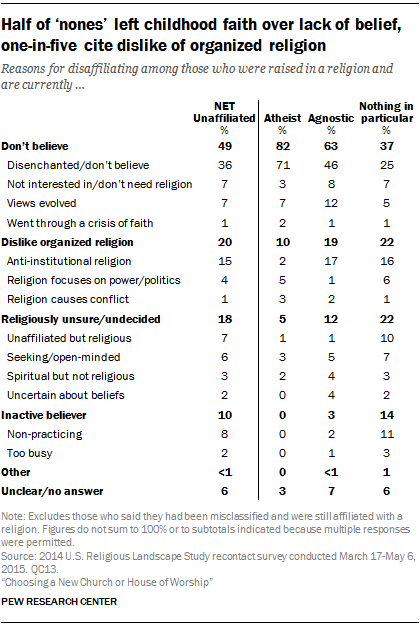
As Jews, we can always find things to worry about--our children, our Jewish future.  We definitely have a lot of work to do.  Synagogue memberships are down across virtually all denominational lines.  Yes there are hot spots of growth, growing cities where more are connected, and ultra-Orthodox groups where extremely large families are the norm, but affiliation is down across EVERY religion.  Catholics and Protestants are also mourning the growth of the nones--unfortunately we are not alone.

So many are “spiritual but not religious”.  They don’t believe in organized religion, but they are searching. I like to remind people that Judaism is a “disorganized” religion, but a little humor doesn’t solve every problem--it helps--and as I mentioned on Rosh Hashanah, might even help get you into heaven.  But seriously, why don’t the spiritual searchers not find us?  What can we do to make our community more engaged, our services more exciting?  Websites and books promise to deliver the secrets to get millennials and other young people more involved.  I’ll tell you a secret.  There are no secrets.  
The answer is simple, but slow.  We must love what we do.  We must feel that it is important.  If we see our faith, our Jewish practices as unimportant, so will those around us.  If we want others to take us seriously, we have to take it seriously, too!  If we love our shul, we will tell our friends and family.  In some ways being a part of a community is like being in a relationship.  If it is exciting we tell all of our friends.  They might occasionally get nauseated at how often we talk about it, but our passion is contagious.  Yes, we need to advertise and try new things.  Rabbi Freedman and I put out a radio ad this high holiday season.  I made a new website for that promotion and am working on a new website for the shul--there is a draft out that you might have seen!  In the last few years, we have been successful here.  Overall numbers grow and shrink--we can increase new members but cannot eliminate death or moving away.  

The question I like to ask myself is what numbers do we use to measure success?  We live in the age of numbers, of big data, but what does data tell us about a congregation?  It may tell us if the budget balances or the number of people that come to particular program.  But does it tell us whose life was changed by coming to a service?  Does it tell us the member who felt overwhelmed with grief and then overwhelmed with love when we filled their home or this shul to sit shiva with them?  Does it tell us of the college student who received a call or text or letter from us and was inspired to participate in Hillel?  I don’t think I’m trying to preserve the rabbinate as a profession, but I define success by inspiration rather than numbers--souls rather than dollars.

Looking at our history--we must think the same way.  We have always been a minority of a minority.  From generation to generation we struggled to survive, to hold our faith and our place in so many societies.  From the Destruction of the Temple and Rome’s eradication of Israel, we did not have a permanent home until almost the present.  We were dependent upon the hospitality of host nations--that were not always enthusiastic to have us.  In 1948 we turned a dream into a reality, the State of Israel.  Like our own reality, it is imperfect.  It must learn about the separation of synagogue and state, how to better welcome refugees, how to create opportunities for all its citizens and what a lasting peace will look like.  At the same time, it has made the desert bloom, produced more NASDAQ companies than almost anywhere else, invented parts of every modern technology and created its own Silicon Valley.  Next June, join me for the trip of a lifetime, connecting your past to our shared present, your history to our Jewish future.  Flyers are in the hallway and I hope that you will take your entire family and join mine--if my parent’s come, my little ones will come, too!  (I know that it an incentive for a few of you on the fence.)

Judaism is not just about history, but the present.  We use our history and our Torah to teach the most important of values.  Tomorrow afternoon, Rabbi Freedman and I will be using texts from HIAS to discuss the struggles of refugees around the world.  From their website:
Founded in 1881 originally to assist Jews fleeing pogroms in Russia and Eastern Europe, HIAS has touched the life of nearly every Jewish family in America and now welcomes all who have fled persecution.
The Universal Declaration of Human Rights, as well as the 1951 Refugee Convention became the basis for U.S. asylum law, giving HIAS the basis for all future work to assist refugees no matter where they were.
  • 1956 - HIAS assisted Jews fleeing the Soviet invasion of Hungary and evacuated the Jewish community of Egypt after their expulsion during the Sinai Campaign.
  • 1959 - HIAS set up operations in Miami to rescue the Jews fleeing Cuba’s revolution.
  • 1960s - HIAS rescued Jews from Algeria and Libya and arranged with Morocco's King Hassan for the evacuation of his country's huge Jewish community.
  • 1968 - HIAS came to the aid of Czechoslovakia's Jews after the suppression of "Prague Spring" and to Poland's Jews after pogroms racked that country.
  • 1975 - Following the fall of Saigon, the State Department requested HIAS’ assistance with the resettlement of Vietnamese, Cambodians, and Laotians. That year, HIAS found new homes for 3,600 in 150 communities in 38 states.  While not the first time HIAS had assisted in the resettlement of non-Jews, the organization’s assistance with this large-scale refugee crisis garnered a special thank you from President Gerald Ford. HIAS continued to assist refugees from Southeast Asia through 1979.
  • 1977 - HIAS helped evacuate the Jews of Ethiopia, which culminated in several dramatic airlifts to Israel.
  • 1979 - The overthrow of the Shah precipitated a slow but steady trickle of Jews escaping the oppressive theocracy of Iran. HIAS helped hundreds of Iranian Jews with close family living in the U.S. resettle here.
  • Hias helped with Jews from the former USSR.
Starting in the 2000s, HIAS expanded our resettlement work to include assistance to non-Jewish refugees, meaning we became involved in the aftermath of conflicts from Afghanistan, Bosnia, Bulgaria, Czechoslovakia, Ethiopia, Haiti, Hungary, Iran, Morocco, Poland, Romania, Tunisia, Vietnam, and the successor states to the former Soviet Union. We began to work in countries where refugees fled to identify those in immediate danger to bring them to safety. We realized that there were many refugees who would not be resettled and that it was important for us to help.
Today that means working with Syrian refugees--a conflict that has taken the lives of hundreds of thousands and created millions who cannot return home.  As Jews, we know what that is like.  In the coming weeks, we will have more opportunities to discuss this.  I would like us to sign on to HIAS welcoming congregations list and perhaps even adopt a family.  More to come as information is available.
Tonight we have crossed back and forth across Jewish history, from past to present, looking closely and more distantly at numbers.  Tonight is the one night a year when we wear a tallit, so I want to close with some numbers about the Tallit’s fringes:
While there are several different numerical interpretations of the tzitzit, the one I like best is the Gematria value of the word "Tzitzit" itself--(tzadi-yod-tzitzit-yod-taf) is 600. Since each corner has eight strands and five knots, making 13, looking at any corner reminds us of the number 613.  With 613 commandments/mitzvot, holding any corner is the same as holding the entire Torah, holding all of our tradition, showing us a physical connection to our past and present.  Discussing the tzitzit, the Torah says, "You should see them and remember all God's commandments and do them." (from the last paragraph of the shema).


However we count our fringes, let them be a reminder to us of our connection to our heritage, to God’s commands, and to the possibility of changing the world for the better.  We are not alone, God is with us, and we should work to inspire one another and those around us to living with that holiness.

Wednesday, October 8, 2014

Yom Kippur Yizkor Broken and the Whole

Rabbi Philip Weintraub
Congregation Agudas Israel
October 4, 2014
Yom Kippur Yizkor

בְּראֹשׁ הַשָּׁנָה יִכָּתֵבוּן וּבְיוֹם צוֹם כִּפּוּר יֵחָתֵמוּן כַּמָּה יַעַבְרוּן וְכַמָּה יִבָּרֵאוּן מִי יִחְיֶה וּמִי יָמוּת.
On Rosh Hashanah it is written, and on the Fast day, Yom Kippur, it is sealed, How many will pass on and how many will be born, who will die and who will live.

From the Unatanah Tokef, a focal point of the Musaf Amidah on both Rosh Hashanah and Yom Kippur, we offer this prayer.  We cry out to Gd, every one of us.  We look around the room.  We see those who are with us and those who are not.  We remember those we lost, the good times and the bad.  

Yet at the same time, we celebrate.  Yom Kippur is a day of deeply mixed emotion.  It is truly a roller coaster of a day.  At Kol Nidre, we ask Gd and each other to pray among sinners, knowing not only that all of us are imperfect, that all of us have sinned.  Whether the sins are large or small, hurting others, ourselves or Gd.  I read this week a brief, yet powerful piece reminding that we must remember not only to forgive others, but to forgive ourselves for the sin of not fulfilling our expectations.  Yom Kippur morning we beat our chests repeatedly.  We cry out to Gd to forgive our sins.  We do the Avodah service, remembering the powerful experience of the Temple, when the Cohen Gadol announced to the community that they were forgiven.  At that point, the modern and ancient versions of Yom Kippur split!  When our ancestors had the Temple in Jerusalem, the rest of Yom Kippur was a celebration.  Once the high priest completed the Avodah service, we knew we were forgiven!  Engagements were made, marriages announced.  The traditional Torah reading for Yom Kippur afternoon is all about relationships--who exactly are you allowed to marry and who can you not?

For us, we do not see the crimson thread turn white.  We do see the scapegoat tossed off a cliff.  We do not know if our sins have been forgiven.  We continue our service with the Eleh Ezkarah, remembering the martyrs of our tradition, Jews killed for teaching Judaism, for simply being Jews.  Originally written about Roman persecution, using stories from the Talmud, today we read about the martyrs of the Crusades, about the Inquisition, about the Shoah, the Holocaust.  We could add readings from Egypt, Yemen, Iraq, where Jews were sent from their homes, exiled and killed because of the blasphemy that there might be a Jewish state in the Middle East.  We could share stories today of Jews attacked around the world, simply for being Jews.  I could go on, but the day continues.

Yom Kippur mincha tells us the story of Jonah.  We remember NON-Jews being told to repent, the people of Nineveh.  Yet they do and they are saved.  On a holiday about our particular relationship with Gd, we share a universal reminder of the power of redemption.  

After mincha, we offer one last prayer service.  No other day of the year has FIVE different services, five different opportunities to beat our breast, to confess our sins.  Yet we come back, again and again, to some of the same words.  We cry out, again and again.  For some the repetition is boring.  They are ready to eat.  (One more thing to confess!)  Yet the repetition can bring us focus, can push us to greater heights.  Coming back this afternoon, this evening, we imagine the gate of forgiveness, the book of life, and we try to write ourselves into it.

If only we work harder. . .
If only we do what we are supposed to do. . .  

As I stand before you this morning, I am torn.  I am broken.  I am imperfect. I am a person who devotes his life to helping others, yet inevitably I fail.  I have spent weeks looking for the perfect words to inspire you, to help you find the strength to live another year.  I have looked for the perfect words, that will inspire you to see the world the way I do, to look at the spirals of the Jewish calendar, to let the rhythm of the calendar be the beat of your life.  And yet as I stand here, the words fall flat.  Not all of them will reach you.  They will drift in the ether, in the echo of this beautiful new room.  So I fall silent.

וּבְשׁוֹפָר גָּדוֹל יִתָּקַע. וְקוֹל דְּמָמָה דַקָּה יִשָּׁמַע.

THE GREAT SHOFAR will be sounded and the still small voice will be heard.

Yom Kippur is unlike any other day.  While we have other fasts, other days of prayer, this is a day of reflection like not other.  What are we trying to do?  Who are we trying to be?  How do our expectations help us succeed or fail?

Last night, I mentioned Rabbi Charles Sherman and his book, The Broken and the Whole: Discovering Joy after Heartbreak.  I want to share a couple excerpts to illustrate how we sometimes have to reconsider the paths we are on, be aware of the expectations we set for ourselves.

From the third page of his book, Rabbi Sherman sets the scene, it is 1985:
“Very few people get to live their dreams.  But there I was, forty-one years old, the rabbi of a major congregation in Syracuse, New York, and married to my summer camp sweetheart.  As a preacher, I was passionate, creative, confident, energetic, and well-known in the greater community.  I was on a career path. . .My children were growing up with a strong sense of identity and appreciation for Jewish values. .  .Not that every last detail was perfect.  I had more trouble than most balancing career and family. . .”
Two pages later he writes:
We cannot always identify the precise point in time when our lives are transformed.  For my family, it was 2AM on a frigid March night. . .when I awoke to a child’s whimper. . .
(After a brief debate over which parent would get him, the not-pregnant one did, Rabbi Sherman went to his son’s room):
I felt his forehead and found it very warm.  Not good, but not a disaster, either.  I would give him Tylenol and call our pediatrician in the morning.
“Eyal, let’s go to the bathroom.”
No response.
“Eyal, let me help you.  You’ll feel better.”. . .
Without my assistance, he would have crumpled to the floor.  I atrributed his fatigue to the late hour.  Then I noticed his pasty color, his jiggling legs, his incoherent speech.  His favorite yellow and red pajamas were drenched in body fluid and his eyes were distant and unaware.  At that moment, before I even called out to Leah for help, I knew: something was terribly wrong.”

From there, doctors were called, visited, hospital stays began.  They discovered a brain lesion and were told that their son had, at most, a few months to live.  Yet they weren’t ready to let go.  They fought and called doctors up and down the east coast.  They found a surgeon willing to operate and the surgery was successful.  They were jubilant!

If the story stopped there, I am not sure Rabbi Sherman would have written his book.  He would have had a brief detour on his career path, a couple months of extra time with his family and then gone back to his previous life.  Yet that is not the end of the story, it is only the beginning.  A few days after the surgery, Eyal had a brainstem stroke and was in a vegetative coma for months.  To hear more of the story, you will have to read his book.  Today Eyal is in his thirties.  He is dependent on a ventilator, cannot breathe, eat, or move independently.  Yet his mind is intact.  With the determination of his family, he had a Bar Mitzvah, attended school, graduated from college.  Putting a paint brush in his mouth, he has become an accomplished painter.  He has found success in his own way.  He has redefined expectations not only for himself, but for his entire family.

Every aspect of their lives had to change.  Every priority had to be reconsidered.  Eyal has had extended stays in the hospital many times in his life.  The Sherman’s home had to be adapted.  Rabbi Sherman even had to reconsider what a Bar Mitzvah would look like--Eyal learned the Torah reading, but could not make it audible--so for that Shabbat, he put in cameras and huge screens so that the congregation could SEE Eyal’s lip read the Torah--with proper trope!

Yizkor for me, is a time of remembrance.  I think of those who I have lost, my grandfathers Artie and Benjamin, my grandma Doris, and those who are still with us, yet sometimes feel lost, my Grandma Alice post-stroke.  I think of those we have lost this year, parents of some of you in this room, people I have known and cared about.  In every family, we have a story of suffering, of illness, of challenge.  Whether it is cancer or heart disease, Ebola, AIDS or tragic accidents, we ourselves or people we know are personally afflicted and affected by challenges.

As the great shofar is sounded, as we imagine writing ourselves in the Book of Life for the next year, I wonder about how we react to all these challenges.  What holds us up when times are tough?  How do we keep our strength when we feel like we will crumble?  What do we have in our toolbox to help us manage our expectations?

At the end of the day, Gd, faith, love, one another, therapy, community are all tools to get us through our difficult times, to help us find ways to celebrate again after and even DURING times of tragedy.  One Yizkor I shared with you the power of AND, that we can be both happy AND sad, jubilant AND disappointed, sweet AND bitter.  Sadness and joy are not mutually exclusive possibilities.

As much as we like, we cannot control every aspects of our lives, every little or big thing that happens to us.  What we can control is our reaction.  How do we deal with the challenges of life?  Choosing to respond positively, with hope, with a new plan for action, that we can do.  As I said on Rosh Hashanah, today is the day Gd has made, rejoice in it.

As we prepare for Yizkor, as we think of those who we have loved and lost, let us think of the decisions they made.  Did they react well to stress and change?  How can we emulate them when they did?  If they did not, how can we use their example to react with love and hope!

Next year, when we return to our regular sanctuary, we will ask ourselves again, for whom has the shofar tolled--and how did we react?

The most powerful line of the Unetanek Tokef tells us that T’shuvah, T’fillah and Tz’dakah have the power to transform the harshness of our destiny.  Renewing ourselves/repenting, prayer/yearning and charity/deeds of righteousness do not miraculously defeat cancer or solve all our problems.  Rather, they change our attitudes; they help us gain the tools to thrive in any situation.

G’mar tov!

Kol Nidre 2014 5775

Rabbi Weintraub
Congregation Agudas Israel
Kol Nidre 5775
October 3, 2014

Erev Tov, good evening,  I want to start tonight by telling you a little joke.  Since I believe that sharing credit helps bring the world to come, Alan Seidman sent it to me.

Moishe Goldberg was heading out of the Synagogue one day, and as always Rabbi  Mendel was standing at the door, shaking hands as the Congregation departed. The rabbi grabbed Moishe by the hand, pulled him aside and whispered these words at him: "You need to join the Army of God!"
Moishe replied: "I'm already in the Army of God, Rabbi."
The rabbi questioned: "Then how come I don't see you except for Rosh Hashanah and Yom Kippur?" Moishe whispered back: "I'm in the secret service."

Like most jokes, it is funny because it has a little truth to it.  We laugh at jokes, because they allow us to laugh at ourselves.  In this room, there are some for whom synagogue is a regular part of their lives and some for whom it is not.  Some of you here light Shabbat candles every week and others might not know a Shabbat candle from a Hanukkah candle.  That is simply the reality of living in 21st century America.  Some of you are happy EXACTLY as you are.  Life is good.  Others are more dissatisfied.  The American Dream is looking a little tarnished, yet even when life is great, sometimes we feel something missing.  The answer to what is missing is right here.  

We are the answer to each other’s problems.  Right here, right now, you can find Gd.  Coming into this room on a regular basis will help make your life more fulfilled.  It will make you feel happier, healthier, and more alive.  (While I cannot claim that it will physically change your health, I believe that spiritually healthy people do feel better than those not in their peak condition.  Atlantic Magazine even had an article just last week about how people’s health declines when they drop their religious affiliations.)  Your doctors tell you to exercise your body.  I am your soul’s doctor and I say you also need to exercise your soul.  Regular spiritual exercise connects you to Gd, connects you to yourself and connects you to one another.

I spoke first about your problems, now I want to talk about our problems.  Like many Catholic, Protestant, Muslim, and Jewish congregations across the country, we are faced with a challenge.  Life is too good in America.  I see you looking at me like I have three heads.  Too good, you ask?  You might be thinking: “I just spent tens of thousands of dollars on my child’s college education and they cannot find a job!” or “My pension is nonexistent and my IRA will cover three years of retirement.  I worry about expenses, about bills, about what might happen if something happens and my deductible has not yet been met for my insurance.”  Maybe you lost your own job or had a period of unemployment.  These are all problems, yet amidst that tsurris MOST all of us in this room have food on our tables.  We have roofs over our heads.  There are (generally) not tanks on our streets.  Police are not breaking down our doors with “no-knock” warrants looking for drugs.  But at the end of the day, life is still too good.  Many people feel that they do not need religion or Gd anymore.  They think they can travel life alone, without the guidance of a spiritual community, without a spiritual/personal network, without clergy or spiritual leadership.  With recent winters, some of you have moved to warmer climes or to be closer to children or grandchildren.  We bring in new members, but we still have the challenge that some are no longer part of THIS holy community.

Right now, right here, I have a solution to both of our problems.  You are all already a part of the Army of Gd and I WANT YOU in the reserves.  Just like the US military reserves, I want to see you once a month and two weeks a year.  If you are currently in the Secret Service, you are already coming the two weeks a year (Rosh Hashanah and Yom Kippur), so you are halfway there.   To participate in this commitment, you simply need to pick one Shabbat services a month and start coming. The Daughters are helping to make this proposition even more enticing.  Once a month will be Simcha Shabbat.  On that Shabbat, we will have a special kiddush lunch.  If you have a birthday, anniversary, special event, we will ask you to make a small donation to assist.  When your donation is combined with those of others, we can make a pretty spiffy lunch!  The leftover funds will ensure that our kiddushes the rest of the year are tasty, too!  Whether you choose to come on Simcha Shabbat or any other week, your presence not only ensures a minyan, but allows us the opportunity to be a stronger community.  We will continue our tradition of monthly Shabbat dinners--which will hopefully allow opportunities to invite the JCC and TBJ, too!  Additionally, we will have a second Friday night service every month in our brand new small sanctuary--which will hopefully be completed soon!  Many people love the intimacy, the melodies of Friday night.  If you are one of those people, come join us.  If you have not yet discovered the blessing of welcoming Shabbat Friday night, join us, too!  Coming together to sing, to talk, to dance, to celebrate we build a holy community.

Every book/blog/article about synagogues right now talks about community and relationships.  While buildings and programs are important, and we want lots of activities to get you in our beautiful new space, what gets you to stay are the connections you make.  When you talk to me; when you talk to your friends (old and new); when you realize the good you can do for others and the good they can do for you, this TRULY becomes a kehilla kedosha, a holy community.  We want CAI and Kol Yisrael to be here in another hundred years, but whatever we call it, we want a strong Jewish community.  

In joining the reserves, I want you to continue to nourish your soul by taking or teaching classes with me.  I want you to help me imagine a learning community.  Whether it means we build a Beit Midrash, a living library, or we set aside more time for Torah study, I want Jewish learning to be more central to our community.  Prayer is when we talk to Gd, but study is where Gd talks to us.  When you look at a Jewish text, you find generations speaking to one another.  The Talmud is Jews from the 2nd century discussing Sinai more than a thousand years before, flanked by conversations about those conversations four hundred years later, edited by rabbis two hundred years later and with commentaries available for the next thousand plus years to the present.  When we talk about Jewish texts, we write our own commentaries--whether in our souls or upon a page--or thoughts are helpful for imagining what our traditions will look like in another thousand years.  Judaism is a do-it-yourself religion, that thrives with community and continuity.  We pray, we study together, because alone we miss the dialogue.  Jews are not monks who read alone.  We argue; we shout; we consider every possibility before coming to a conclusion.  The argument that was rejected a thousand years before is written down, because it might just be relevant to us today!

Returning to my metaphor, I am not asking you to re-up full time.  I am not asking you to come to minyan every single day.  (Although it we wanted to start a once a week minyan, I would be excited!)  I am asking for four hours a month.  I am asking for two to three hours in shul, including schmoozing at kiddush and one to two hours attending a class, stuffing envelopes, dreaming of new activities with me or others.  Tomorrow we will ask for your financial support, but tonight I want you to consider your emotional/ spiritual/temporal support.

What would make you want to come through these doors more often?  What would it take to light the fire in YOUR soul?  Is it music? Is it Torah?  Is it art? Is it literature? Is it yoga, meditation? Social action? For some of these things, we already have great activities.  For others, we will need your help!  

Every month, I have two different book clubs.  One is in my home, where we discuss fiction or nonfiction that has either a Jewish author or Jewish theme.  Suggestions are always welcome.  If you love a book, are passionate about it, share it with us.  If you love it and can articulate why, you can help lead a fascinating conversation.  On that note, Rabbi Charles Sherman of Syracuse, has written a powerful book, The Broken and the Whole: Discovering Joy after Heartbreak speaking about the challenges of expectations and living joyfully with the difficulties and heartbreak of his son’s illnesses.  We will be reading it soon and I hope to invite him to our congregation to share his story!

My other book club is discussing the Rabbinical Assembly’s The Observant Life, The Wisdom of Conservative Judaism for Contemporary Jews.  Each month we discuss a topic from what makes food kosher, to what makes sex kosher, to what does it mean to pray as Jews.  We have discussed business ethics and the roles of parents and grandparents.  Each month is a new opportunity to join, think and discuss.  While some of us have been meeting regularly, others drop in when the topic is interesting to them.   This is your formal invitation to come back if you have missed a few sessions or join us if you have never come before!

Some of these activities will stimulate your soul.  Some will help us work more efficiently.  Yet, together, they create a sense of holy purpose.  The create a holy community, a kehillah kedoshah.  

Tonight we come together to acknowledge our shortcomings, to confess our sins and to make plans for a better year.  We are all imperfect.  We all make mistakes.  Yet when we support one another, we find ways to restore our souls.  Joining our holy community, offering our prayers, our regrets and our hopes, is truly life changing.  As you beat your chest today, feel the weight of guilt left.  Last year at this time, I spoke about how we change our habits permanently.  I mentioned that the best way to stop a bad habit was to replace it with a good one.   Let this community be the good habit.

As we continue our service, I offer my thanks to all of you.  You have taken the first and most important step of Jewish life--YOU ARE HERE.  That is a tremendous step, a huge blessing and I commend you for it.  I look forward to seeing you tomorrow, to continuing our conversations about the Jewish future.


G’mar hatimah tovah, may you be SEALED in the book of life.