Showing posts with label hope. Show all posts

Wednesday, June 13, 2018

On saying goodbye

This is a very strange month for me. As I prepare to depart from Newburgh and Congregation Agudas Israel, I am beginning to contemplate my new life in St. Petersburg with Congregation B’nai Israel. I wonder what will be the same and what will be different? What will my responsibilities entail? How will I be welcomed and how will I ensure that the synagogue there is a place of welcoming for all?


This too is a journey!

As I ponder those questions, I have been working on the challenging text of winding down here. I have been trying to keep up my normal working activities, while also making extra efforts to make phone calls, meet in person, sit down and talk to the people of CAI. For the last seven years, they have been by my side in so many different ways. We have studied Torah together, prayed together, shared celebrations and mourned together. As I go about these coffees, lunches, dinners, meetings I have become overwhelmed by the words of kindness I have heard. I have discovered that small gestures on my part have been received as larger than life by their recipients. A phone call, a text message, a Facebook post, a hospital or home visit.

For me, these are what I imagine is expected behavior from a rabbi. Our job, our career is study, prayer, inspiration, but most of all, it is to be present with the souls of those around us. The job is not just what we put down on paper or in the ether of the internet, but in the human interactions that are far harder to tally. I might have made lists of the thousands of phone calls, hundreds of visits, and far too many funerals, but instead we all have our respective memories.

Through it all, I am most grateful to my beloved. She has stood by me through interrupted dinners, evenings, nights. She has known that those “interruptions” were sacred moments, calls to be with people in their brightest and darkest moments. Being a rabbi is more than a full time position. My phone is always nearby. Even on Shabbat, we can be reached via the doorbell. None of this would be possible without her support and her love. My work is in my office and yours, in my home and yours, within the community in so many different ways. As I say my goodbyes around town, I discover that within the community I am a (very) minor celebrity, that my gestures of goodwill have been well received.

All in all, I am grateful for the time I have spent here. For me, Newburgh and CAI was a place of personal, spiritual, intellectual growth. It was a place where I took the theory of my education and turned it into practical ministry, practical rabbinics. Sometimes I made mistakes, and I hope that I took responsibility for them, that I learned from them. I have never claimed to be perfect, but am always striving to be better, to build a kesher, a connection with Gd and community.

Leaving is bittersweet. New opportunities beckon, new adventures await, yet the love I have for this community will always remain. CAI and Newburgh are holy places. They have been an essential part of my rabbinic journey. I pray for the strong, bright, vibrant future of these holy communities.

Tuesday, January 23, 2018

Thank you JTS. RTI was amazing.

From January 7-11, 2018, I had the privilege of attending the 33rd Annual Rabbinic Training Institute.

 I am deeply grateful to an anonymous donor who helped make it possible for me to attend. Since my ordination, I’ve desired to go, but time and/or finances have never quite worked out. I cannot fully express my appreciation to them for making it happen this year.

Every year I would hear from colleagues what an amazing experience it was. I heard of colleagues who have been every year for a decade or more. They spoke highly of hevruta, of collegiality, of time for Torah that was truly Lishmah.

My time at Pearlstone was restorative. It was enriching. It was inspiring. Studying with Rabbi Dr. Jeff Rubenstein, Rabbi Dr. Joel Roth, and Rabbi Dan Liben was so powerful. The professional skills were also useful, but the Torah was simply on another plane. I am grateful for having the opportunity to put text in context with Dr. Rubenstein, to think about how to connect Talmudic sources to our modern lives. While I attempt (and regularly fail) at Daf Yomi, I enjoy the breadth of the material, of trying to think about how the rabbis would view our milieu.  Dr. Rubenstein really captured that spirit, juxtaposing modern and ancient texts in unique ways. I was especially fond of the Israeli/Bavli intermarriage and comparison to Amelia Bedelia.

Studying with Rabbi Roth is always a pleasure. His digressions are as inspiring as his texts. He finds ways of reminding us of the importance of studying from those we may disagree with, of looking at complicated and challenging issues and finding more positive solutions. He is humorous and serious in a way that shows a living Torah.

Rabbi Liben’s manner of teaching was so gentle and yet so hopeful. He brought an energy and a level of forgiveness that I needed at this time in my life. The texts and practices he shared were a reminder of how we can build a spiritual practice through our sources, our prayers, our liturgy. Again, the Torah he taught was vital, filled with a life force human and Divine.

In our daily lives as rabbis, we strive to be present for our communities and congregants. Sometimes we need a reminder to stop and take care of our own souls, our own bodies, our own spirits, our own hearts and minds. RTI was a sacred gift. It brought me closer to myself, to my friends, my Torah, and to our shared Shechinah, our Divine Presence. It was a holy experience and I returned energized and enlivened. Since I have returned, I have mentioned RTI on a daily basis. The Torah I learned there is one that will be with me always. I cannot wait to sign up for next year.

Wednesday, December 6, 2017

Vayeshev: You, too can change the world!

What can you do to change the world?

So often we feel small, insignificant.  We are not Presidents or CEOs. How can we influence the world?  How can we make it a better place?

In this video I talk about this week's parsha and how we all have a role to play.  All you have to do is ask "How can I help?"  (I think Daniel Tiger would agree!)


One way I try to make a difference is through regular Torah study.  When we sit and look at our texts, we find the commonalities we have with our history and our future!


Friday, May 5, 2017

Tazria Metzora--Empathy, Medicine and OUR Rabbinical Assembly

Rabbi Philip Weintraub
Congregation Agudas Israel
4/29/17

Twenty years ago, I stood in front of Congregation Beth Shalom in Dunwoody, GA, with family and friends.  I read from the Torah, led the services, and shared words of Torah.  I suppose one might say not much has changed in the last twenty years!  Standing on that bimah I spoke about Parshat Tazria,  I still have not found my bar mitzvah speech.  I wonder if I spoke to the dermatologists in the audience or focused on the rabbinic relation to motzi shem ra, to evil speech.  I had two powerful experience this week relating to the parsha, that I would like to share with you all.

First is related to the parsha directly.  I read from my friend and colleague, Rabbi Noah Farkas.  He wrote in the LA Jewish Journal about how this parsha teaches empathy. (http://jewishjournal.com/culture/religion/torah_portion/218359/parshat-tazria-metzora-burden-gift-empathy/) He opened with a necessary theological apology.  SPeaking of this rabbinic connection between behavior and illness, he wrote of how so many feel guilt, that they somehow deserve their illness, and argued that we must break this link.  When we graft morality too heavily onto purity and wellness, we cause more suffering while ignoring the sanctity of the sick. To be unclean is not to be immoral — ever.”  When I stand in a hospital room, I am reminded of this over and over again.  Illness comes to young and old, to innocent and guilty, to good and not so good people.   While there are some illnesses that are a consequence of past choices, they are still not punishment for sins in other parts of our life.  We may CHOOSE to try to gain strength from the suffering, but it does not mean the suffering is a consequence of our actions.  Rabbi Farkas has a Jewish bio-medical ethics group with doctors and wrote of the parallels between our modern doctors and the priests of old.  He reminds us that empathy is a necessity for medical care.  “After the priest sees them and welcomes them back to the community, a sacrificial rite is performed. The patient is brought to the literal center of the community and anointed in the same manner with the same rituals that anoint the High Priest over the people. Both priest and patient are bound together in this ritual of mutuality.” I think that as mechanized and technologicized (I may have made up that word) as medicine has become, the human connection is essential.  Some medical schools even have mock patient scenarios as part of their interviews to weed out potential doctors who have absolutely no bedside manner!  

Dovetailing with those words of Torah, were words I heard on Thursday at the Rabbinical Assembly’s Executive Council meeting.  I went perhaps unethusiastically.  How could I miss our annual meeting?  How could I be away from our community to think about the needs of the RA.  What is the purpose of the RA for me?  Yet after just a few hours, I saw great holiness.  I heard powerful Torah.  I saw an organization that is looking carefully at its past and future.  Like our congregation, the RA is over 100 years old.  Like us, it has people that are more and less connected, wondering about what comes next.

Over the two days I was at the Pearlstone Retreat Center (http://pearlstonecenter.org), we carefully considered a proposal from a Texan rabbi.  We went through a huge agenda and made significant progress.  We even changed our meeting structure for the future.  Rather than going through a standard agenda, our future meetings will only have action items.  If it is just a report, we will read it before the meeting.  Those reports will include follow-ups to ensure that previous items are dealt with.  This is called a consent agenda--we consent that we can group those reports into one agenda item and quickly move on to the things that matter!  The second day was follow-up on the RA’s strategic plan.  The last two years the board and another 30-60 rabbis have been heavily involved in considering what the RA has been successful at and what is essential for its future.  The biggest change may seem small, but has been to change the language.  Instead of saying THE RA as I just did, it is calling it OUR RA. When we speak of OUR RA, we are claiming ownership.  We remind ourselves and those around us that we are a part of that organization.  How would that work for us?  We might speak of OUR shul instead of THE shul.  Our Agudas Israel instead of just CAI.  Our home instead of just Kol.  

Returning the parsha, I want to share a verse that was mentioned in a Dvar Torah yesterday.  Vayikra 13:3 says:
וְרָאָ֣ה הַכֹּהֵ֣ן אֶת־הַנֶּ֣גַע בְּעֽוֹר־הַ֠בָּשָׂר וְשֵׂעָ֨ר בַּנֶּ֜גַע הָפַ֣ךְ ׀ לָבָ֗ן וּמַרְאֵ֤ה הַנֶּ֙גַע֙ עָמֹק֙ מֵע֣וֹר בְּשָׂר֔וֹ נֶ֥גַע צָרַ֖עַת ה֑וּא וְרָאָ֥הוּ הַכֹּהֵ֖ן וְטִמֵּ֥א אֹתֽוֹ.
׃The priest shall examine the affection on the skin of his body: if hair in the affected patch has turned white and the affection appears to be deeper than the skin of his body, it is a leprous affection; when the priest sees it, he shall pronounce him unclean
As my colleagues noted, it is strange that the priest seems to examine or look at the person or irritation twice.  The question is the focus of the second look.  Before declaring the person clean or unclean, the priest must look at the WHOLE person.  Like every hospital and medical practice claims today, they must not just look at the illness, but the entire person.  Doctors, nurses and our ancient priests recognize that the illness is not in isolation. It is not just a skin infection.  It is on a human being.  That person has needs, wants, hopes, dreams.  That person lives in their economic, social, religious context.  If the doctor sees only the irritation, she cannot do her job.  

This is a major challenge of the economics of medicine today, when doctors are required by their employers to see far too many patients.  They have no time to be patient and to do their job well are often forced to work extra unpaid hours to deal with their paperwork and computers.  While I cannot claim to have a solution for that issue, our Torah reminds us that it is a problem!  So as I declare the importance of empathy FROM the medical professions, let us also have have empathy FOR the medical professions.  They, too, are people who must have lives and possibilities.

Shabbat Shalom!

Tuesday, February 28, 2017

Jewish values in a challenging time

What are our values?
What do we care about?
Our history and texts teach us that there are multiple paths to annunciate and demonstrate what we care about.  We can write, speak, march, do, listen, care, spend money.  Some say actions are louder than words, while others focus on the power of the pen (or keyboard).

In our morning prayers, we do not just bless the Holy One for the gift of Torah, but rather say:
Barukh atah Adonai Eloheinu melekh ha’olam asher kid’shanu b’mitzvotav v’tzivanu la’asok b’divrei torah.
Blessed are You, Lord our God, Master of Space and Time, who has sanctified us with commandments, and commanded us to be occupied with words of Torah.

The word “la’asok” is key here.  Translations vary from study, to be occupied with, to practice, to engage with.  Regardless of how we translate the word, it is one that demands action.  It is an active word imagining us wrestling, fighting with, engaging with the texts.

Our texts debate which is more important--action or study, with strong arguments on each side.  One of the most popular of those debates in the Talmud ends with the command that we study--for it leads to action.  (See for example: http://www.myjewishlearning.com/article/learning-amp-doing/)

For me study is a gift.  It is time to consider our past, present and future.  It is a way to see the conversations that are relevant today have been with us for generations.  The Torah teaches repeatedly about caring for the stranger, widow and orphan--those who need a little more help.  The Talmud teaches about the importance of freeing slaves and redeeming captives--knowing that the world is not perfect and we can be both oppressor and victim.  Our identities are not static, but ever changing.  Our choices make all the difference.

This week has made me very antsy.  Hearing reports of cemeteries desecrated, of JCCs and Jewish centers and schools having bomb threats, I wonder how I can most actively contribute.  Donations are wonderful, but how can we prevent future attacks?  How can I be a voice for calm and reason when I, myself, am frustrated?

So I have made phone calls to my elected officials.  I have thanked my local police officers. I lock my doors and set the alarm, yet I also make sure that I remain active in community events. I have recommitted myself to study.  I pray that my study will lead me to further action.  What will you do next?

Tuesday, November 29, 2016

Yom Kippur: Choose good, the world will help you out

Rabbi Philip Weintraub
Yom Kippur Yizkor
10/12/16

“If you choose good, the world is more than willing to help you out,” said a character on a silly sitcom this August.

TV marketers have discovered that people my age are rather nostalgic, although to be fair, I’m not sure that is entirely related to my demographic!  When I was a child, ABC had a long running show called Boy Meets World, about a rather awkward kid (Cory), his best friend (Shawn), eventual girlfriend and then wife (Topanga) growing up in the suburbs of Philadelphia.  Disney recently restarted the show as Girl Meets World, centering it around the life of Cory and Topanga’s daughter and her group of friends.  While the show is mostly saccharinely sweet and frequently inane, it has such positive values, discusses important issues in simple ways, and thus keeps me watching.

A few weeks ago they had an episode about a classroom debate--the nature of humanity--are people inherently good or evil.  The idealistic and upbeat main character was forced to confront the evil in the world, in the daily news, and in life.  When she discovers her little brother had cleaned up a small section of beach, she responded uncharacteristically darkly--”why would you do that? What good did you do?”  Her mom reminded her children of the classic story of the little boy and the starfish:
The little boy at the beach grabbing the poor sand-stranded starfish and hurling them back into the sea. The old man who asks the boy, “Do you really think you’re making any difference?” The boy, bright-eyed and righteous, who holds aloft one of his rescued starfish, delivers the line, “It makes a difference to this one!”, and throws it into the water.

Don’t worry, by the end of the episode, the protagonist, through the help of her friends, rediscovered her overwhelmingly good nature and positive spirits.  If only all of our conflicts could be resolved in 23 minutes!  Thinking more about the story within the story, the story of the starfish, I discovered that even a little throw-away uplifting story has its critics.  They argue that the little boy should try to figure out WHY the starfish are dying on the beach--or even if the starfish have agency to make their own decisions and the kid is stopping their life choices--the internet can be a dark place!  On an educator blog, I found a rewritten version--the drowning baby version--which when it was published two years ago was far less offensive than in the light of the refugee crises we see in Europe and the thousands that have drowned in the Mediterranean.

The kid’s grown up now, and he’s reading a book beside a gently gurgling river. Suddenly a drowning baby floats by. True to his nature, the Samaritan jumps in and saves the child. But pretty soon, another drowning baby floats past. He saves that one too. And the next. And the next. And the next.
A few hours later, his chest heaving, his arms exhausted, a cold dread settles over the man. He has realized the inevitable: There will come a time when I’m too tired to save even one more drowning child. That’s the point at which he looks upstream and sees someone throwing the babies in.
This version of the story asks us to get to the root of the problem.  Not just how do we solve the immediate needs--which are no less urgent--but how do we ensure that we discover the big picture--to see if we can do something to stop the problem from the start.  The challenges arise when we are not able to do change the instigating factor, when we know the problem, but are stuck with piecemeal solutions.
Looking around the world right now, Aleppo, the city which produced and kept for millenia the Aleppo Codex, a very early Jewish Bible manuscript, is under siege.  The evil Assad fights to restore it to Syrian control with Russian assistance, yet “good” rebels and ISIS fight, as well.  There is no good solution--yet the fighting in Syria has displaced millions of people, killed hundreds of thousands, and leaves many struggling to escape and find refuge anywhere but there.  We know the problem, Assad’s corrupt government kept stability through oppression.  It was the devil we knew--but it cannot retain the entire country.  We can arm rebels, create no-fly zones, but until there is some peace, the flow of blood and refugees will continue.  What can we do here?  I have no more answers than I did last night.  After the service, this afternoon, join me and Rabbi Freedman to discuss Jewish texts on refugees, on welcoming the stranger--and hear stories of our own people who found their way to these shores--allowing us to be here today!
Returning to my silly sitcom, Corey, the dad and teacher on the new show, said “How you treat the world affects how the world teaches you” and later “If you choose good, the world is more than willing to help you out.”
Last night I spoke about what we value, what reminds us to do good, our responsibility in this world.  But what are we?  Who are we?  What is our life?  These questions are asked in the daily liturgy and emphasized at Neilah this evening.

רִבּוֹן כָּל הָעוֹלָמִים, לֹא עַל צִדְקוֹתֵֽינוּ אֲנַֽחְנוּ מַפִּילִים תַּחֲנוּנֵֽינוּ לְפָנֶֽיךָ, כִּי עַל רַחֲמֶֽיךָ הָרַבִּים.


מָה אֲנַֽחְנוּ, מֶה חַיֵּֽינוּ, מֶה חַסְדֵּֽנוּ, מַה צִּדְקוֹתֵֽינוּ, מַה יְּשׁוּעָתֵֽנוּ, מַה כֹּחֵֽנוּ, מַה גְּבוּרָתֵֽנוּ. מַה נֹּאמַר לְפָנֶֽיךָ, יְיָ אֱלֹהֵֽינוּ וֵאלֹהֵי אֲבוֹתֵֽינוּ, הֲלֹא כָּל הַגִּבּוֹרִים כְּאַֽיִן לְפָנֶֽיךָ, וְאַנְשֵׁי הַשֵּׁם כְּלֹא הָיוּ, וַחֲכָמִים כִּבְלִי מַדָּע, וּנְבוֹנִים כִּבְלִי הַשְׂכֵּל. כִּי רֹב מַעֲשֵׂיהֶם תֹּֽהוּ, וִימֵי חַיֵּיהֶם הֶֽבֶל לְפָנֶֽיךָ, וּמוֹתַר הָאָדָם מִן הַבְּהֵמָה אָֽיִן, כִּי הַכֹּל הָֽבֶל.
Sovereign of all worlds! Not because of our righteous acts do we lay our supplications before thee, but because of thine abundant mercies.
What are we? What is our life? What is our piety? What our righteousness?
What our helpfulness? What our strength? What our might? What shall we say before thee, O Lord our God and God of our fathers? Are not all the mighty men as nought before thee, the men of renown as though they had not been, the wise as if without knowledge, and the men of understanding as if without discernment? For most of their works are void, and the days of their lives are vanity before thee, and the pre-eminence of man over the beast is nought, for all is vanity.
אֲבָל אֲנַֽחְנוּ עַמְּךָ, בְּנֵי בְרִיתֶֽךָ, בְּנֵי אַבְרָהָם אֹהַבְךָ שֶׁנִּשְׁבַּֽעְתָּ לּוֹ בְּהַר הַמּוֹרִיָּה, זֶֽרַע יִצְחָק יְחִידוֹ, שֶׁנֶּעֱקַד עַל גַּבֵּי הַמִּזְבֵּֽחַ, עֲדַת יַעֲקֹב בִּנְךָ בְּכוֹרֶֽךָ, שֶׁמֵּאַהֲבָתְךָ שֶׁאָהַֽבְתָּ אוֹתוֹ, וּמִשִּׂמְחָתְךָ שֶׁשָּׂמַֽחְתָּ בּוֹ, קָרָֽאתָ אֶת שְׁמוֹ יִשְׂרָאֵל וִישֻׁרוּן. לְפִיכָךְ אֲנַֽחְנוּ חַיָּבִים לְהוֹדוֹת לְךָ, וּלְשַׁבֵּחֲךָ, וּלְפָאֶרְךָ, וּלְבָרֵךְ וּלְקַדֵּשׁ וְלָתֵת שֶֽׁבַח וְהוֹדָיָה לִשְׁמֶֽךָ. אַשְׁרֵֽינוּ, מַה טּוֹב חֶלְקֵֽנוּ, וּמַה נָּעִים גּוֹרָלֵֽנוּ, וּמַה יָּפָה יְרֻשָּׁתֵֽנוּ. אַשְׁרֵֽינוּ, שֶׁאֲנַֽחְנוּ מַשְׁכִּימִים וּמַעֲרִיבִים, עֶֽרֶב וָבֹֽקֶר,
Nevertheless we are thy people, the children of thy covenant, the children of Abraham, thy friend, to whom thou didst swear on Mount Moriah; the seed of Isaac, his only son, who was bound upon the altar the congregation of Jacob, thy first barn son, whose name thou didst call Israel and Jeshurun by reason of the love wherewith thou didst love him, and the joy wherewith thou didst rejoice in him.
It is, therefore, our duty to thank, praise and glorify thee, to bless, to sanctify and to offer praise and thanksgiving unto thy name. Happy are we! how goodly is our portion, and how pleasant is our lot, and how beautiful our heritage! Happy are we who, early and late, morning and evening, twice every day,
וְאוֹמְרִים פַּעֲמַֽיִם בְּכָל יוֹם
שְׁמַע ׀ יִשְׂרָאֵל, יְיָ ׀ אֱלֹהֵֽינוּ, יְיָ ׀ אֶחָד
declare:
Hear, O Israel: the Lord our God, the Lord is One. Blessed be His name, whose glorious kingdom is forever and ever.

This prayer takes us down to the depths and brings us up again.  It says we are NOTHING before the Holy One, but says we are EVERYTHING.  From this Rabbi Simcha Bunim of Peschischa goes follows teaches a lesson I remind myself of regularly:
Everyone must have two pockets, with a note in each pocket, so that he or she can reach into the one or the other, depending on the need. When feeling lowly and depressed, discouraged or disconsolate, one should reach into the right pocket, and, there, find the words: "For my sake was the world created."
But when feeling high and mighty one should reach into the left pocket, and find the words: "I am but dust and ashes

The challenge with the pockets is knowing which one we need to look into!  It is the challenge of the starfish and of the babies.  We can do our part or we can be overwhelmed with the futility of the world.  If we think too highly or lowly of ourselves we become completely ineffectual.  Yet if we can somehow find the balance, the happy medium, we can raise our community to incredible heights.

This past year I have sat in on some phone calls with the United Synagogue’s Inclusion Initiative--sponsored by the Ruderman Foundation.  The focus is on the inclusion of people with disabilities--but of radically rethinking what we mean by inclusion.  It is not just fixing the handicap ramp or making sure anyone can have an aliyah, that anyone can get on the bimah--although those are essential steps.  Rather, it is a reminder that we need to make sure people are truly welcomed, their voices heard.

As I have participated in some of these conversations, I have thought about inclusion in the community in general.  We have so much work to do--with interfaith families, with people with less visible disabilities, with people with children, with those without children, with empty nesters, older folks and even those magical young families.  Inclusion should not just be for a special group, but an understanding that ALL can be a part of our community.  Do we want our community to be one with low barriers or high ones?  

Mah anachnu? Mah hayenu?
Who are we? What is our life?

Our liturgy teaches us of the sacred relationships that we form through our traditions.  Yes, we have clear expectations through the mitzvot.  Yet we are not always ready for those expectations.  They seem dated or not for us.  So many of us or our children are simply not involved in our Jewish lives anymore.  This is a failure of the American Jewish establishment, of synagogues, of rabbis and teachers.  We have failed to teach the joy, the inspiration, the sacred mystery that is faith and Judaism.
 
On a certain level, we all know that “If you choose good, the world is more than willing to help you out,” said that character.  Great good can be done by atheists and Christians and secular individuals.  And yet, I invite you to discover the sacred in that great mystery that is your OWN tradition.

Last week, a beloved board member lost his mother.  He sat shiva here and during the minyan, this room was as full as it is today.  We are willing to come out to support our friends, but are we willing to support the community as a whole?  Without each other, without all of you, none of this is possible!  Our tradition reminds us of the importance of coming together at those moments.  We have rituals for EVERY major life cycle.  Why?  What is so special about those moments?

They are the moments that stick with us.  The holidays, the life cycles, Shabbat, they bring us together.  When we are together, we laugh and we cry, we celebrate and we mourn.  They are moments of STRONG emotion.  And the guilt when we cannot make it work--well that’s a piece of the package.

In the weeks to come, I want you to do good.  I want you to hear for the response from God and/or the Universe.  I want you to do the right thing because it is the right thing, but I also want you to do it because it is the JEWISH way.

Without a political overtone, one of the responsibilities of citizenship is voting--whether in our synagogue elections or the national and local ones.  If you live in NY, the deadline for voter registration is this Friday, October 14.  Remind your children, your grandchildren or even yourself.  We all have opinions about the election and we all can agree that it is an important one!
Mah anachunu?  What are we?  We are servants of God.  We are part of a sacred community.  We are the ones who look after one another, who support one another, and know that the world can be better--if only we do our part.  Come dance with us for Simchat Torah!  Light the Hanukkah candles with us this winter.  Learn Torah together with me or anyone else!  Be proud to be Jewish and share that joy with all who know you!  “If you choose good, the world is more than willing to help you out.”


Kol Nidre 5777: Counting our blessings

Rabbi Philip Weintraub
Congregation Agudas Israel
10/11/16

Four years ago yesterday, I was telling my wife that if she could have held our daughter inside just one more day, H could be born on 10/11/12.  My love did not find it nearly as amusing as I did.  Yet, numbers, gematria, have a long history in the Jewish world.  Today I think about another anniversary.  Fifteen years ago, on September 11, our world changed.  Occurring just six days before Rosh Hashanah, the terrorist attacks sent rabbis scrambling, forced to rewrite their holiday sermons, forced to confront the reality of evil in a world where it had seemed vanquished.  

The horrors of the collapse of Yugoslavia, the violence and Bosnia genocide there was just six years before; the Rwandan genocide was just a decade before.  In some ways, it felt a more innocent time.  CNN had been around for twenty years but Foxnews had not even seen a decade.  You could go to an airline gate with barely an ID check, hang around an airport and watch the planes take off, or even chat with a pilot during the flight.  You didn’t have to take your shoes off and you could carry a soda or water from your car all the way to the airplane. Heck, you could show up 10 minutes before the flight and probably still make your plane.

While the lesson that evil still exists was the one that resonated with most people, there was another side, too.  The Red Cross had to stop accepting blood, because their banks were all full.  People spent weeks and months working “the pile” trying to save anyway left and then later to make sure that families could have as proper a burial as they could.  

What have we learned in the last fifteen years?  

This year we flew to Atlanta on September 11.  I have to say, I was a little concerned.  It was actually one of the most uneventful and fastest security experiences we had at Newark.  My wife even got precheck and was able to leave her shoes on!  With the privilege of modern air travel we were able to welcome our newest niece into our family.  What a mitzvah to celebrate the birth of a new child.  There is nothing more optimistic in the world that looking into the potential of a newborn.  Seeing the tiny fingers and toes, we cannot help but take a breath and give thanks for all that is good in this world.  

It seems like we all need more reminders to give thanks, although there is much more work to be done.  Looking around the world, there are so many places with seemingly endless strife and unrelenting conflict.  The war in Syria is getting worse and worse.  In Afghanistan, we have faced the same challenges the Russians had decades ago and the British had a century before.  Russia is getting more and more totalitarian--and don’t even get me started on this election.  

Yet the big question I have is why are we so afraid?  
Our economy is much better than it has been.  Gas prices are lower than they have been in years.  Grocery costs are down.  Electronics are cheaper, too.  Car technology has improved tremendously.  Healthcare is still a mess, but more people have insurance--it might be more expensive but it covers more conditions--especially in New York.  After quite a runaround, my love got new hearing aids, mostly covered by our insurance company!  Consumer confidence is up to some of its highest levels, yet there is a feeling of unease.  For a little while we worried about police being killed, but those numbers are still down by a third from the early 80s and have continued to drop.  As long as you weren’t murdered in the spike of killings in a handful of cities this year, overall violence and violent crime is way, way down.  Unlike Australia, we still have a problem with school shootings, but overall, we are very lucky to be alive right now.  For many Americans, this year finally, finally saw some real wage growth.  Are we trying to return America to some ahistorical moment of greatness or steadily build a future that has opportunities for ALL.

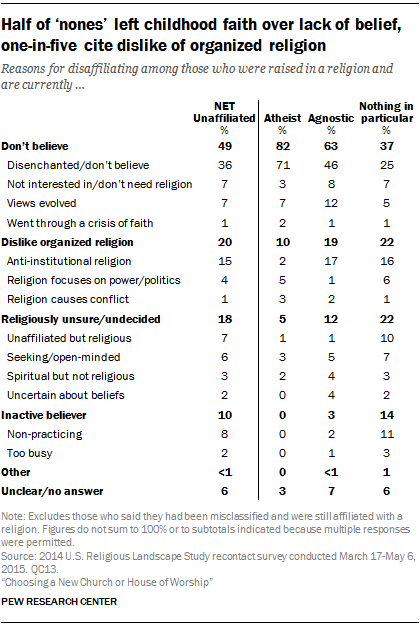
As Jews, we can always find things to worry about--our children, our Jewish future.  We definitely have a lot of work to do.  Synagogue memberships are down across virtually all denominational lines.  Yes there are hot spots of growth, growing cities where more are connected, and ultra-Orthodox groups where extremely large families are the norm, but affiliation is down across EVERY religion.  Catholics and Protestants are also mourning the growth of the nones--unfortunately we are not alone.

So many are “spiritual but not religious”.  They don’t believe in organized religion, but they are searching. I like to remind people that Judaism is a “disorganized” religion, but a little humor doesn’t solve every problem--it helps--and as I mentioned on Rosh Hashanah, might even help get you into heaven.  But seriously, why don’t the spiritual searchers not find us?  What can we do to make our community more engaged, our services more exciting?  Websites and books promise to deliver the secrets to get millennials and other young people more involved.  I’ll tell you a secret.  There are no secrets.  
The answer is simple, but slow.  We must love what we do.  We must feel that it is important.  If we see our faith, our Jewish practices as unimportant, so will those around us.  If we want others to take us seriously, we have to take it seriously, too!  If we love our shul, we will tell our friends and family.  In some ways being a part of a community is like being in a relationship.  If it is exciting we tell all of our friends.  They might occasionally get nauseated at how often we talk about it, but our passion is contagious.  Yes, we need to advertise and try new things.  Rabbi Freedman and I put out a radio ad this high holiday season.  I made a new website for that promotion and am working on a new website for the shul--there is a draft out that you might have seen!  In the last few years, we have been successful here.  Overall numbers grow and shrink--we can increase new members but cannot eliminate death or moving away.  

The question I like to ask myself is what numbers do we use to measure success?  We live in the age of numbers, of big data, but what does data tell us about a congregation?  It may tell us if the budget balances or the number of people that come to particular program.  But does it tell us whose life was changed by coming to a service?  Does it tell us the member who felt overwhelmed with grief and then overwhelmed with love when we filled their home or this shul to sit shiva with them?  Does it tell us of the college student who received a call or text or letter from us and was inspired to participate in Hillel?  I don’t think I’m trying to preserve the rabbinate as a profession, but I define success by inspiration rather than numbers--souls rather than dollars.

Looking at our history--we must think the same way.  We have always been a minority of a minority.  From generation to generation we struggled to survive, to hold our faith and our place in so many societies.  From the Destruction of the Temple and Rome’s eradication of Israel, we did not have a permanent home until almost the present.  We were dependent upon the hospitality of host nations--that were not always enthusiastic to have us.  In 1948 we turned a dream into a reality, the State of Israel.  Like our own reality, it is imperfect.  It must learn about the separation of synagogue and state, how to better welcome refugees, how to create opportunities for all its citizens and what a lasting peace will look like.  At the same time, it has made the desert bloom, produced more NASDAQ companies than almost anywhere else, invented parts of every modern technology and created its own Silicon Valley.  Next June, join me for the trip of a lifetime, connecting your past to our shared present, your history to our Jewish future.  Flyers are in the hallway and I hope that you will take your entire family and join mine--if my parent’s come, my little ones will come, too!  (I know that it an incentive for a few of you on the fence.)

Judaism is not just about history, but the present.  We use our history and our Torah to teach the most important of values.  Tomorrow afternoon, Rabbi Freedman and I will be using texts from HIAS to discuss the struggles of refugees around the world.  From their website:
Founded in 1881 originally to assist Jews fleeing pogroms in Russia and Eastern Europe, HIAS has touched the life of nearly every Jewish family in America and now welcomes all who have fled persecution.
The Universal Declaration of Human Rights, as well as the 1951 Refugee Convention became the basis for U.S. asylum law, giving HIAS the basis for all future work to assist refugees no matter where they were.
  • 1956 - HIAS assisted Jews fleeing the Soviet invasion of Hungary and evacuated the Jewish community of Egypt after their expulsion during the Sinai Campaign.
  • 1959 - HIAS set up operations in Miami to rescue the Jews fleeing Cuba’s revolution.
  • 1960s - HIAS rescued Jews from Algeria and Libya and arranged with Morocco's King Hassan for the evacuation of his country's huge Jewish community.
  • 1968 - HIAS came to the aid of Czechoslovakia's Jews after the suppression of "Prague Spring" and to Poland's Jews after pogroms racked that country.
  • 1975 - Following the fall of Saigon, the State Department requested HIAS’ assistance with the resettlement of Vietnamese, Cambodians, and Laotians. That year, HIAS found new homes for 3,600 in 150 communities in 38 states.  While not the first time HIAS had assisted in the resettlement of non-Jews, the organization’s assistance with this large-scale refugee crisis garnered a special thank you from President Gerald Ford. HIAS continued to assist refugees from Southeast Asia through 1979.
  • 1977 - HIAS helped evacuate the Jews of Ethiopia, which culminated in several dramatic airlifts to Israel.
  • 1979 - The overthrow of the Shah precipitated a slow but steady trickle of Jews escaping the oppressive theocracy of Iran. HIAS helped hundreds of Iranian Jews with close family living in the U.S. resettle here.
  • Hias helped with Jews from the former USSR.
Starting in the 2000s, HIAS expanded our resettlement work to include assistance to non-Jewish refugees, meaning we became involved in the aftermath of conflicts from Afghanistan, Bosnia, Bulgaria, Czechoslovakia, Ethiopia, Haiti, Hungary, Iran, Morocco, Poland, Romania, Tunisia, Vietnam, and the successor states to the former Soviet Union. We began to work in countries where refugees fled to identify those in immediate danger to bring them to safety. We realized that there were many refugees who would not be resettled and that it was important for us to help.
Today that means working with Syrian refugees--a conflict that has taken the lives of hundreds of thousands and created millions who cannot return home.  As Jews, we know what that is like.  In the coming weeks, we will have more opportunities to discuss this.  I would like us to sign on to HIAS welcoming congregations list and perhaps even adopt a family.  More to come as information is available.
Tonight we have crossed back and forth across Jewish history, from past to present, looking closely and more distantly at numbers.  Tonight is the one night a year when we wear a tallit, so I want to close with some numbers about the Tallit’s fringes:
While there are several different numerical interpretations of the tzitzit, the one I like best is the Gematria value of the word "Tzitzit" itself--(tzadi-yod-tzitzit-yod-taf) is 600. Since each corner has eight strands and five knots, making 13, looking at any corner reminds us of the number 613.  With 613 commandments/mitzvot, holding any corner is the same as holding the entire Torah, holding all of our tradition, showing us a physical connection to our past and present.  Discussing the tzitzit, the Torah says, "You should see them and remember all God's commandments and do them." (from the last paragraph of the shema).


However we count our fringes, let them be a reminder to us of our connection to our heritage, to God’s commands, and to the possibility of changing the world for the better.  We are not alone, God is with us, and we should work to inspire one another and those around us to living with that holiness.

Wednesday, September 16, 2015

Rosh Hashanah day 2--Israel-our hope every day

Rabbi Philip Weintraub
Congregation Agudas Israel
September 15, 2015
Rosh Hashanah Day 2

A few weeks ago Rebecca and I celebrated our anniversary at Madison Square Garden with Billy Joel.  Ok, so it wasn’t just us, way up in the nosebleeds, but tens of thousands of his screaming fans attending this concert.  He played the crowd well, brought in Yitzhak Pearlman to play for a couple of songs, to standing ovations and raucous cheers.  Yet what brought the room to the loudest applause, what brought most people to their feet was
Some folks like to get away
Take a holiday from the neighborhood
Hop a flight to Miami Beach
Or to Hollywood
But I'm talking a Greyhound
On the Hudson River Line
I'm in a New York state of mind
Wherever they came from, wherever they were going home that night, standing with Billy Joel, they were New Yorkers.  Many of you know my story, that I was born in New York, yet grew up outside Atlanta, went to Brandeis, JTS in NYC and now my home is with you all.  If I did my math correctly, this year officially pushes me over the top, I have now lived in New York more than any other state.  Yet, even as I look out over the Hudson River, there are other songs in my heart and they aren’t The Devil Went Down to Georgia or Midnight Train to Georgia. I’m not even talking about “leaving my home in Georgia heading for the Hudson Bay”. No, the songs in my heart are Yerushalayim Shel Zahav, Al Kol Eileh, Bashanah Haba’ah, songs in the back of the USY bentcher, B’kol Echad; they are songs of Israel.  They are songs longing for peace, yet unafraid to demand Jewish sovereignty,  filled with biblical allusions and verses.  For most Jews, their first steps in Israel are strangely familiar.  For many, there is an immediate connection to the land, to the people, to the very soil itself.  Something in the air is just different in Israel, a little bit holier.

There is an old joke:
The Chief Rabbi of Israel and the Pope are in a meeting in Rome. The Rabbi notices an unusually fancy phone on a side table in the Pope's private chambers.
"What is that phone for?" he asks the pontiff.
"It's my direct line to the Lord!"
The Rabbi is skeptical, and the Pope notices. The Holy Father insists that the Rabbi try it out, and, indeed, he is connected to the Lord.  The Rabbi holds a lengthy discussion with him.
After hanging up the Rabbi says. "Thank you very much. This is great! But listen, I want to pay for my phone charges."
The Pope, of course refuses, but the Rabbi is steadfast and finally, the pontiff gives in. He checks the counter on the phone and says:
"All right! The charges were 100,000 Lira." ($50)
The Chief Rabbi gladly hands over a packet of bills. A few months later, the Pope is in Jerusalem on an official visit. In the Chief Rabbi's chambers he sees a phone identical to his and learns it also is a direct line to the Lord. The Pope remembers he has an urgent matter that requires divine consultation and asks if he can use the Rabbi's phone.
The Rabbi gladly agrees, hands him the phone, and the Pope chats away. After hanging up, the Pope offers to pay for the phone charges.
The Rabbi looks on the phone counter and says: "1 Shekel 50" ($.25)
The Pope looks surprised: "Why so cheap!?!"
The Rabbi smiles: "Local call."

Wandering in the streets of Jerusalem, it really feels like God is a little bit closer, which could explain why everyone seems a little bit crazier, and that is not even speaking of Jerusalem syndrome, when people imagine themselves to be prophets!  In my time in Jerusalem, I discovered that whenever I was stressed I would start walking and end up at the Kotel, the Western Wall. Every time I am in Israel it is harder to return, yet I know that I belong here, with my family, in America.  I am just lucky to have more than one home AND YOU DO, TOO.

Israel.

Israel is the crossroads of the world, the heart of it according to our tradition and medieval mapmakers.  It has never been an easy place to live.  Conquered and reconquered, it has always been a home to Jews, although not always comfortably (Depending on who was in charge).  Israel is a country with multiple microclimates, from skiing on Mt. Hermon to the deserts in the south.  It has taken enormous ingenuity to produce everything from Jaffa oranges to pharmaceuticals to the essential silicon chips in virtually every cell phones.  To truly boycott Israel, one would have to do without numerous medicines, and virtually all modern technology!

I stand before you on this second day of Rosh Hashanah, not to invite you to come to Israel with me in May, not to regale you with the beauty of the country, not to remind you of the miracle of its rebirth, or its antiquity, or its imperfect balance of secularism and religion (or its successes and failures in peace and war with its neighbors and citizens).  I am not standing here merely to inspire you to join me in May, to see her citizens, her miracles, or even to celebrate Rosh Chodesh, the new month with Women of the Wall, or Israeli Memorial Day and Independence Days, which are an experience like no other.  (Ok, I do tell you those things because I would LOVE to have you join me in Israel.)

The real reason that, I stand here today to share with you my thoughts about the very fabric of the universe and our place in it.  Over the next ten days and beyond, we will spend a significant amount of time together.  Yesterday, Shabbat, Yom Kippur, Sukkot and Simchat Torah are all sacred times.  We come together with deep intentions.  We choose our clothing, our hair, our kippah, our tallit, maybe even wear a white kittel to announce to ourselves and those around us that this is a time for prayer and reflection.  On these days we can sustain our attention, connect to the prayers (or the wonderful readings in the margins of our prayerbook), but what about all of the other days?

How do we sustain the prayerfulness of these days?  How do we hang onto the holiness of these days?  How do we bring the sanctity, the love, the joy, the hope, the freedom and even the awe to every other day of the year?  In our own lives, I believe that every single moment is an opportunity for us.  Every single moment.  Not just when we stand here together, but also when our toddler is having a temper tantrum, when we are talking to our loved ones, when we argue with customer disservice, or when we see the sun set over our beautiful Hudson River.  Love of Israel, of our Jewish homeland, whether yearning to return or yearning to go for the first time, is one way to connect to our heritage, to God and to one another, not just today, but every day.

One Yom Kippur, I spoke of the attempts of Temple Emmanuel in Newton to connect its community to all aspects of Jewish life.  Using the metaphor of gates, they offered an access point to our holy traditions. Throughout the building, on the website, on every page of their literature was a reference to the “Seven Gates:”Torah, Prayer, Israel, Shabbat, Redeeming the World, Building Community, and Teaching Jewish Values.” Recognizing that we are all individuals, that we all connected to God, Torah and Israel differently, they have codified and sanctified their values for all to see.  

In our own community, these same values shape all that we do.  I won’t repeat that sermon, but I do want to return our thoughts to Israel.  Israel is many things to our people.  It is the land promised to Abraham.  It is the place where our ancestors walked, the homeland for thousands of years.  Yet for generations of Jews, it was inaccessible.  It was the memory of the destruction of the Temple, forced exile, oppression, the loss of sovereignty.  In 1867, Mark Twain wrote of Israel:
“….. A desolate country whose soil is rich enough, but is given over wholly to weeds… a silent mournful expanse…. a desolation…. we never saw a human being on the whole route…. hardly a tree or shrub anywhere. Even the olive tree and the cactus, those fast friends of a worthless soil, had almost deserted the country.”
Yet even if it was mostly desolate, for generation upon generation, we yearned to return, to escape the galut, the exile and come home.  We wanted to wander no more, to feel the rootedness the rest of the world had but we did not.  In the Middle Ages, outside of Pilgrimages or traders (like many Jews), most people lived and worked in the places of their birth.  Looking at Jewish history of the time, we were welcomed and then expelled from virtually every country in existence!

Our daily liturgy is filled with its fervent prayer for the restoration of Israel and Jerusalem, modernity brought Zionism, which offered a modern hope for a renewed State of Israel, HATIKVAH, our hope.  With diplomacy, White Papers, and facts on the ground, waves of Aliyah, brought more and more Jews back to the land (and away from European and Russian Pogroms (and eventually the Shoah)).  Establishing farms, kibbutzim, factories and other endeavors, with some spectacular failures, our brothers and sisters managed to do the impossible,to reestablish a long dormant state.  To truly make it happen they needed the UN and a military.  

For decades, Israel’s creation has been a miracle and uniter of (most of) the Jewish people.  Across denominational (and political) lines (eventually), it reminded us of our own possibilities.  If Israel could be reestablished after almost two thousand years, what else could be we accomplish?  With American progress seemingly unstoppable the fifties, sixties and seventies, were times of optimism for American Jewry and Israel. Shuls were built in every new suburb and Conservative Judaism seemed prepared to triumph over all competitors.

Yet times have changed.  For many of our brethren, Israel remains an inspiration.  While still a tiny minority in the region, a matchbox on the football field of Middle Eastern land, its military no longer seems like a David to the Arabs’ Goliath.  In today’s world, Israel is not always a unifying beacon of hope for the Jewish people.  The generation in school today has no memory of the founding of the state of Israel, of Sinai campaigns or the Six Day War.  Maybe they remember the challenges of Lebanon, the Oslo accords, or the intifadas.  Some see oppression and occupation, rather than the only democracy in the Middle East.  Our brothers and sisters might want to look to Israel’s neighbors.  Syria, Iraq, Lebanon barely exist independently.  Iran’s nuclear designs paralyzed its economy for years, but it still managed to finance terror through Hezbollah and Hamas.  Jordan, Egypt, the Gulf States, Saudi Arabia are all currently semi-stable, but no one can predict if that will last.  Israel may not be perfect, but thinking about Noah who was a tzadik bdorotav, righteous in his generation, we might say Israel is tzadikah b’makomah, righteous for its place.

As Conservative Jews, we are angered that women still cannot pray freely at the Kotel, that it is possibly illegal for me to officiate at a wedding in Israel.  Marriage, divorce and even funerals are legally under the exclusive control of the rabbanut, the official Orthodox rabbis of the state.  Israel is NOT perfect.  We have to fight to get things done, but the same is true here at home.  Just like our own country, it could treat those who are not citizens (and even those who are) with more respect and love.  Prime Minister Netanyahu could use a reminder of one of our central verses of Torah, (Deut 10:19)
יט  וַאֲהַבְתֶּם, אֶת-הַגֵּר:  כִּי-גֵרִים הֱיִיתֶם, בְּאֶרֶץ מִצְרָיִם.
19 Love ye therefore the stranger; for ye were strangers in the land of Egypt.
And yet, he must preside over a pretty chaotic security situation!

I love America.  It is my home.  It is a beautiful country that has more diversity of people and ideas than almost anywhere in the world.  Our wonderful, progressive nation is also plagued by gun violence, racism, classism, inequality, apathy and few who desire to thoughtfully discuss these issues.  We would rather speak AT one another than WITH one another.  Do we throw up our hands and say, America is evil or wrong or terrible because it is not perfect?  No, we demand better of our elected officials.  Eventually, we throw the “bums” out and elect people who share our values.  The same must be true for Israel.  We must work for positive change, while recognizing the security, religious and political concerns of the region.

Amidst all of this tsuris we forget two vital facts
  1. Israel will always be our home.
  2. Israel is not just another country.

At the end of the day, we need Israel.  If our history has taught us anything, it is that we need a place that will welcome us if the world changes again.  The fact of Israel’s existence protects us in the world.  Israel sees itself as the protector of the Jewish community throughout the world.  Israel also needs us.  It needs us to protest when our rabbis are mistreated, our women are mistreated, and our friends and neighbors are mistreated.  It requires from us a strong voice pushing for Israel to be at its best--while being aware that our words matter.

Israel is not just another country.  As the self-declared representative of the Jewish people, which we don’t always accept, it is held to standards no other nation could meet.  Its conduct in peace and in war are scrutinized like no other.  Ancient hatreds find themselves exposed in the fight against Israel.  The UN which helped found it has written scores more resolutions for supposed violations of human rights than it has against Syria, Libya, China, North Korea, Iran, Iraq, Afghanistan.  American and British generals have noted that Israel does more to prevent civilian casualties than any other nation, yet is publicly reviled for its military conduct.  Let me be clear, Israel could do much more to be a good steward for all its citizens, Jewish, Muslim, Christian, Druze. Racism and religious extremism must be fought within all its populations and policies and procedures should not be biased, yet it is the only country in the region that all can live and worship basically freely.  When the issue of Palestinian refugees is raised, we cannot forget the 800,000 Jews who were kicked out of their former homes in Iraq, Afghanistan, Egypt, Jordan, Iran, and beyond after the establishment of the state of Israel.  

I share all this with you this morning, because I want you to take more ownership of Israel.  That means understanding your history.  Take a class with me, read your Bible, keep up with current events.  It means standing up and demanding action from Israel and from America.  Protect Israel out of love.  Visit Israel with me or on your own.  Volunteer or donate with the Masorti movement, with Mercaz Olami to help push Israel to be a more democratic and egalitarian place, a real home for all Jews.  Criticize it to make it better--but know your audience.  Don’t give fodder to the anti-Semites.

Psalm 137 1-6

א  עַל נַהֲרוֹת, בָּבֶל--שָׁם יָשַׁבְנוּ, גַּם-בָּכִינוּ:    בְּזָכְרֵנוּ, אֶת-צִיּוֹן.
1 By the rivers of Babylon, there we sat down, yea, we wept, when we remembered Zion.
ב  עַל-עֲרָבִים בְּתוֹכָהּ--    תָּלִינוּ, כִּנֹּרוֹתֵינוּ.
2 Upon the willows in the midst thereof we hanged up our harps.
ג  כִּי שָׁם שְׁאֵלוּנוּ שׁוֹבֵינוּ, דִּבְרֵי-שִׁיר--    וְתוֹלָלֵינוּ שִׂמְחָה:
שִׁירוּ לָנוּ,    מִשִּׁיר צִיּוֹן.
3 For there they that led us captive asked of us words of song, and our tormentors asked of us mirth:{N}
'Sing us one of the songs of Zion.'
ד  אֵיךְ--נָשִׁיר אֶת-שִׁיר-ה":    עַל, אַדְמַת נֵכָר.
4 How shall we sing the LORD'S song in a foreign land?
ה  אִם-אֶשְׁכָּחֵךְ יְרוּשָׁלִָם--    תִּשְׁכַּח יְמִינִי.
5 If I forget thee, O Jerusalem, let my right hand forget her cunning.
ו  תִּדְבַּק-לְשׁוֹנִי, לְחִכִּי--    אִם-לֹא אֶזְכְּרֵכִי:
אִם-לֹא אַעֲלֶה, אֶת-יְרוּשָׁלִַם--    עַל, רֹאשׁ שִׂמְחָתִי.
6 Let my tongue cleave to the roof of my mouth, if I remember thee not; {N}
if I set not Jerusalem above my chiefest joy.

In our days together, may we continue to discover ways of connecting to God, to Torah, to Israel and to our entire Jewish community.  May the words of our mouths and the meditations of our heart help us to discover the strivings, the yearning within us all.  May we turn those yearnings into action.   אִם-אֶשְׁכָּחֵךְ יְרוּשָׁלִָם--    תִּשְׁכַּח יְמִינִי If we do not remember Jerusalem, we are incomplete.  Unlike the psalmist, we CAN sing praises of Israel outside the land.  We can work to make the country better.  We can use our yearning to re-establish the homeland we all deserve.  We can visit and advocate.  In doing so, we will bring holiness into our lives every day of the year.