Showing posts with label kol nidre. Show all posts

Tuesday, November 29, 2016

Kol Nidre 5777: Counting our blessings

Rabbi Philip Weintraub
Congregation Agudas Israel
10/11/16

Four years ago yesterday, I was telling my wife that if she could have held our daughter inside just one more day, H could be born on 10/11/12.  My love did not find it nearly as amusing as I did.  Yet, numbers, gematria, have a long history in the Jewish world.  Today I think about another anniversary.  Fifteen years ago, on September 11, our world changed.  Occurring just six days before Rosh Hashanah, the terrorist attacks sent rabbis scrambling, forced to rewrite their holiday sermons, forced to confront the reality of evil in a world where it had seemed vanquished.  

The horrors of the collapse of Yugoslavia, the violence and Bosnia genocide there was just six years before; the Rwandan genocide was just a decade before.  In some ways, it felt a more innocent time.  CNN had been around for twenty years but Foxnews had not even seen a decade.  You could go to an airline gate with barely an ID check, hang around an airport and watch the planes take off, or even chat with a pilot during the flight.  You didn’t have to take your shoes off and you could carry a soda or water from your car all the way to the airplane. Heck, you could show up 10 minutes before the flight and probably still make your plane.

While the lesson that evil still exists was the one that resonated with most people, there was another side, too.  The Red Cross had to stop accepting blood, because their banks were all full.  People spent weeks and months working “the pile” trying to save anyway left and then later to make sure that families could have as proper a burial as they could.  

What have we learned in the last fifteen years?  

This year we flew to Atlanta on September 11.  I have to say, I was a little concerned.  It was actually one of the most uneventful and fastest security experiences we had at Newark.  My wife even got precheck and was able to leave her shoes on!  With the privilege of modern air travel we were able to welcome our newest niece into our family.  What a mitzvah to celebrate the birth of a new child.  There is nothing more optimistic in the world that looking into the potential of a newborn.  Seeing the tiny fingers and toes, we cannot help but take a breath and give thanks for all that is good in this world.  

It seems like we all need more reminders to give thanks, although there is much more work to be done.  Looking around the world, there are so many places with seemingly endless strife and unrelenting conflict.  The war in Syria is getting worse and worse.  In Afghanistan, we have faced the same challenges the Russians had decades ago and the British had a century before.  Russia is getting more and more totalitarian--and don’t even get me started on this election.  

Yet the big question I have is why are we so afraid?  
Our economy is much better than it has been.  Gas prices are lower than they have been in years.  Grocery costs are down.  Electronics are cheaper, too.  Car technology has improved tremendously.  Healthcare is still a mess, but more people have insurance--it might be more expensive but it covers more conditions--especially in New York.  After quite a runaround, my love got new hearing aids, mostly covered by our insurance company!  Consumer confidence is up to some of its highest levels, yet there is a feeling of unease.  For a little while we worried about police being killed, but those numbers are still down by a third from the early 80s and have continued to drop.  As long as you weren’t murdered in the spike of killings in a handful of cities this year, overall violence and violent crime is way, way down.  Unlike Australia, we still have a problem with school shootings, but overall, we are very lucky to be alive right now.  For many Americans, this year finally, finally saw some real wage growth.  Are we trying to return America to some ahistorical moment of greatness or steadily build a future that has opportunities for ALL.

As Jews, we can always find things to worry about--our children, our Jewish future.  We definitely have a lot of work to do.  Synagogue memberships are down across virtually all denominational lines.  Yes there are hot spots of growth, growing cities where more are connected, and ultra-Orthodox groups where extremely large families are the norm, but affiliation is down across EVERY religion.  Catholics and Protestants are also mourning the growth of the nones--unfortunately we are not alone.

So many are “spiritual but not religious”.  They don’t believe in organized religion, but they are searching. I like to remind people that Judaism is a “disorganized” religion, but a little humor doesn’t solve every problem--it helps--and as I mentioned on Rosh Hashanah, might even help get you into heaven.  But seriously, why don’t the spiritual searchers not find us?  What can we do to make our community more engaged, our services more exciting?  Websites and books promise to deliver the secrets to get millennials and other young people more involved.  I’ll tell you a secret.  There are no secrets.  
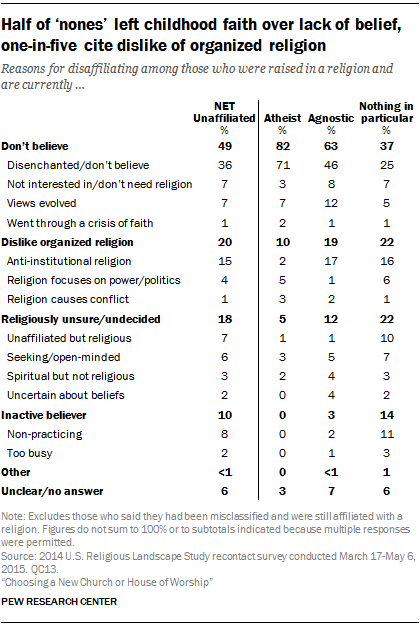
The answer is simple, but slow.  We must love what we do.  We must feel that it is important.  If we see our faith, our Jewish practices as unimportant, so will those around us.  If we want others to take us seriously, we have to take it seriously, too!  If we love our shul, we will tell our friends and family.  In some ways being a part of a community is like being in a relationship.  If it is exciting we tell all of our friends.  They might occasionally get nauseated at how often we talk about it, but our passion is contagious.  Yes, we need to advertise and try new things.  Rabbi Freedman and I put out a radio ad this high holiday season.  I made a new website for that promotion and am working on a new website for the shul--there is a draft out that you might have seen!  In the last few years, we have been successful here.  Overall numbers grow and shrink--we can increase new members but cannot eliminate death or moving away.  

The question I like to ask myself is what numbers do we use to measure success?  We live in the age of numbers, of big data, but what does data tell us about a congregation?  It may tell us if the budget balances or the number of people that come to particular program.  But does it tell us whose life was changed by coming to a service?  Does it tell us the member who felt overwhelmed with grief and then overwhelmed with love when we filled their home or this shul to sit shiva with them?  Does it tell us of the college student who received a call or text or letter from us and was inspired to participate in Hillel?  I don’t think I’m trying to preserve the rabbinate as a profession, but I define success by inspiration rather than numbers--souls rather than dollars.

Looking at our history--we must think the same way.  We have always been a minority of a minority.  From generation to generation we struggled to survive, to hold our faith and our place in so many societies.  From the Destruction of the Temple and Rome’s eradication of Israel, we did not have a permanent home until almost the present.  We were dependent upon the hospitality of host nations--that were not always enthusiastic to have us.  In 1948 we turned a dream into a reality, the State of Israel.  Like our own reality, it is imperfect.  It must learn about the separation of synagogue and state, how to better welcome refugees, how to create opportunities for all its citizens and what a lasting peace will look like.  At the same time, it has made the desert bloom, produced more NASDAQ companies than almost anywhere else, invented parts of every modern technology and created its own Silicon Valley.  Next June, join me for the trip of a lifetime, connecting your past to our shared present, your history to our Jewish future.  Flyers are in the hallway and I hope that you will take your entire family and join mine--if my parent’s come, my little ones will come, too!  (I know that it an incentive for a few of you on the fence.)

Judaism is not just about history, but the present.  We use our history and our Torah to teach the most important of values.  Tomorrow afternoon, Rabbi Freedman and I will be using texts from HIAS to discuss the struggles of refugees around the world.  From their website:
Founded in 1881 originally to assist Jews fleeing pogroms in Russia and Eastern Europe, HIAS has touched the life of nearly every Jewish family in America and now welcomes all who have fled persecution.
The Universal Declaration of Human Rights, as well as the 1951 Refugee Convention became the basis for U.S. asylum law, giving HIAS the basis for all future work to assist refugees no matter where they were.
  • 1956 - HIAS assisted Jews fleeing the Soviet invasion of Hungary and evacuated the Jewish community of Egypt after their expulsion during the Sinai Campaign.
  • 1959 - HIAS set up operations in Miami to rescue the Jews fleeing Cuba’s revolution.
  • 1960s - HIAS rescued Jews from Algeria and Libya and arranged with Morocco's King Hassan for the evacuation of his country's huge Jewish community.
  • 1968 - HIAS came to the aid of Czechoslovakia's Jews after the suppression of "Prague Spring" and to Poland's Jews after pogroms racked that country.
  • 1975 - Following the fall of Saigon, the State Department requested HIAS’ assistance with the resettlement of Vietnamese, Cambodians, and Laotians. That year, HIAS found new homes for 3,600 in 150 communities in 38 states.  While not the first time HIAS had assisted in the resettlement of non-Jews, the organization’s assistance with this large-scale refugee crisis garnered a special thank you from President Gerald Ford. HIAS continued to assist refugees from Southeast Asia through 1979.
  • 1977 - HIAS helped evacuate the Jews of Ethiopia, which culminated in several dramatic airlifts to Israel.
  • 1979 - The overthrow of the Shah precipitated a slow but steady trickle of Jews escaping the oppressive theocracy of Iran. HIAS helped hundreds of Iranian Jews with close family living in the U.S. resettle here.
  • Hias helped with Jews from the former USSR.
Starting in the 2000s, HIAS expanded our resettlement work to include assistance to non-Jewish refugees, meaning we became involved in the aftermath of conflicts from Afghanistan, Bosnia, Bulgaria, Czechoslovakia, Ethiopia, Haiti, Hungary, Iran, Morocco, Poland, Romania, Tunisia, Vietnam, and the successor states to the former Soviet Union. We began to work in countries where refugees fled to identify those in immediate danger to bring them to safety. We realized that there were many refugees who would not be resettled and that it was important for us to help.
Today that means working with Syrian refugees--a conflict that has taken the lives of hundreds of thousands and created millions who cannot return home.  As Jews, we know what that is like.  In the coming weeks, we will have more opportunities to discuss this.  I would like us to sign on to HIAS welcoming congregations list and perhaps even adopt a family.  More to come as information is available.
Tonight we have crossed back and forth across Jewish history, from past to present, looking closely and more distantly at numbers.  Tonight is the one night a year when we wear a tallit, so I want to close with some numbers about the Tallit’s fringes:
While there are several different numerical interpretations of the tzitzit, the one I like best is the Gematria value of the word "Tzitzit" itself--(tzadi-yod-tzitzit-yod-taf) is 600. Since each corner has eight strands and five knots, making 13, looking at any corner reminds us of the number 613.  With 613 commandments/mitzvot, holding any corner is the same as holding the entire Torah, holding all of our tradition, showing us a physical connection to our past and present.  Discussing the tzitzit, the Torah says, "You should see them and remember all God's commandments and do them." (from the last paragraph of the shema).


However we count our fringes, let them be a reminder to us of our connection to our heritage, to God’s commands, and to the possibility of changing the world for the better.  We are not alone, God is with us, and we should work to inspire one another and those around us to living with that holiness.

Wednesday, September 30, 2015

Kol Nidre 2015

Rabbi Philip Weintraub
Congregation Agudas Israel
9/22/15 (5776)
Kol Nidre: Holiness of Mundane in Human relationships

Before I start another sermon with a joke, I want to add a brief follow-up to my second day Rosh Hashanah sermon.  I spoke about the miracles and challenges of Israel and challenged you to come with me next May.  The flyers are at the table with your nametags and deposits are being accepted starting Thursday!  Now, to the humor:
A rabbi, a priest and a minister are fishing, sitting on a little boat in the middle of a lake.  After a little while, the rabbi says, “I think I need a soda.” So he walks across the lake and grabs a drink from his picnic basket on shore.  A few minutes later, the priest says “I could really use my sandwich,” so he walks across the lake and grabs a bite from his picnic basket.  The minister is absolutely amazed at this and decides to try it out.  He excuses himself to use the restroom, takes a step off the boat and starts splashing about in the water.  The rabbi turns to the priest and says, “Should we have told him about the stepping stones?”

What does it mean to be a community?  In the last few years, United Synagogue has stopped calling its member congregations congregations.  Instead they call them kehillot, communities.  We strive to be a kehillah kedoshah, a holy community, where we look out for one another, support one another, help in times of need and celebrate each other's simchas.  The rabbi and priest in my joke would have been a lot nicer had they just told the minister where the steps were!

As a community, we keep each other in the loop.  If someone is sick, we check in on them.  Hopefully I am told.  Every month in the bulletin I write that sometimes it is ok to gossip.  I would rather hear that someone is ill three times than not hear at all. While many value their privacy, I cannot offer a prayer, cannot visit, if I do not know in the first place!  Creating and growing a community is dependent on our interconnectedness.

One of the aspects of this shul that I love is the feeling of community.  In the last few years, I can think of quite a few moments where we really did things right.  When “my girls” had their bat mitzvah, so many of you came to support, that it looked like Yom Kippur--although the kiddush was a heck of alot better.  Together they worked with me for quite awhile (and continue to do so) and when we celebrated their accomplishments people really showed up.  At bar mitzvahs of some of the young people of this congregation, the same spirit was found.  There is a great energy in this room when we truly come together.  When my daughter was born we found that same energy at her naming.  Celebrating her birth with so many of you, we discovered the love that is in this community.  We pray for many more such occasions in the future!

On the other side of things, when we have lost members and friends, we have never been short for a shiva minyan.  Even when members had been less active in their later years, shiva minyanim have been well attended.  While it would be nice if more people attended some of those funerals, I spoke this week with a recent widow and she shared how touched she was with those from way back who came to attend her husband’s funeral and shiva.

Just this past week I had another moment of celebration.  I was talking to one of our co-presidents, recovering from back surgery.  He said, “Did you tell everyone to call me? I heard from him and her and her and him to see how I was doing?”  I said, “It wasn’t me.  They are doing it on their own.”  In that moment, if I can pat myself on the back, I realized that my teachings and sermons are truly sinking in!

As a rabbi, as a chaplain, the lesson that I have really learned is “just show up”.  This lesson does not apply only to me.  Your presence is what makes or breaks an event.  It is what changes a class from me talking to myself to a spirited discussion.  Your physical self in this room transforms a service from personal prayer to a minyan. Your presence at a funeral, a shiva, in the home of someone who doesn’t get out much can provide so much support.  

When you visit someone who is ill your presence can actually help to heal!  Tractate Bava Metzia teaches that visiting the ill removes 1/60th of the illness!  This isn’t to say that you just need sixty visitors, as the Talmud and later commentators advise not overwhelming people, not arriving at the same time as the doctor, and giving people with intestinal distress more space so that they are not embarrassed by their noises and odors. With those caveats, the rabbis understood that just showing up is incredibly powerful for people.  Even if there is nothing “to do”, keeping a family member company can be a major source of consolation in a difficult time.  Don’t worry too much about saying the wrong thing, but try to give the person you are visiting space to talk.  Try listening more than speaking and then you won’t say anything you regret!  (That is a good lesson not just in a hospital, but in a shiva home, or in many conversations!)

Now that I’ve just said presence is more important than words, let me remind you that what and how we say does matter, too. The way we speak to one another, what we choose to say, and where we choose to say those words are all incredibly important and should reflect our values.  We must be careful of the words we choose, not just in a hospital, but in all situations.

There is a famous story elsewhere in Bava Metzia (84a) about Rabbi Yochanan and Reish Lakish, two famous scholars.  Rabbi Yochanan was known for his great beauty, which helped to inspire Reish Lakish to drop his first profession (as a leader of bandit and thieves) and become a Jewish scholar!  Rabbi Yochanan taught Reish Lakish Torah for years; they became very close, chevrutas, study partners and friends.  

This close friendship was broken one day when their normally spirited arguments of details of Jewish law took a personal turn.  Discussing swords and weapons, Rabbi Yochanan believed that the manufacturing of a sword was complete when it was tempered in an oven.  Reish Lakish said it was not complete until it had been cooled in water after that heating.  They debated for awhile until Rabbi Yochanan said, “you were once a bandit, so you are the expert on swords.”  Reish Lakish was broken hearted and replied “If you still think of me as a bandit, what did you ever do for me?”  Rabbi Yochanan replied “What did I do for you?  I reformed your ways.  I brought you under God’s protection.  How dare you not appreciate this!”  The two men departed, both deeply offended and personally hurt by the other's reaction.  Reish Lakish was so upset, and so crushed internally, that he fell ill, and eventually died because of it.
One might think the story is over there.  Yet the lesson continues with the reminder that even deep relationships can be irreparably harmed by harsh words and hurt feelings.  The narrative continues:
Rabbi Yochanan was upset and grieved greatly for his departed friend.  The other Rabbis saw this and wanted to pick him up.  They knew that Rabbi Yochanan was at his happiest when he was studying with Reish Lakish, so they began a search to find the most brilliant scholar they could, and would pair the two together as new study partners.  They found a tremendously bright student, who for every teaching Rabbi Yochanan would bring, would give a long list of reasons why he was correct.  But this did nothing for Rabbi Yochanan.  "I don't need this," he said.  "What I need is for you to tell me why I am wrong.  That is what made Reish Lakish so special.  That for every teaching I brought, he would tell me 24 reasons why I was wrong.  It was through that discussion and that debate, that we each came to see the other's viewpoint, and together we were able to finally learn what a correct answer might be."

In our tradition, arguing is important.  Disagreements are important.  Yet, we have to be aware of HOW we are arguing.  We must do so with respect, with love with kindness.  Showing respect applies even in board meetings and financial discussions!  We must remember that from our tradition, from our Talmud, public embarrassment is seen as a cardinal sin.

While I could give you several sources,  Bava Kamma 90a gives several examples of huge fines for seemingly minor physical confrontations.
. צרם באזנו, תלש בשערו, רקק והגיע בו רוקו, העביר טליתו ממנו, פרע ראש האשה בשוק נותן לו ארבע מאות זוז

4) If he tore at his ear, plucked out his hair, spat at him and his spit touched him, or pulled his cloak from off him, or loosed a woman’s hair in the street, he must pay 400 zuz.
Dr Josh Kulp of the Conservative Yeshiva writes;
“These types of blows will probably not cause any damage and therefore the fines are for embarrassment only...They demonstrate that Jewish law takes publicly embarrassing another person very seriously and penalizes such a person with a stiff financial penalty.  Indeed according to Jewish tradition one who publicly embarrasses another is akin to a murderer. “ http://learn.conservativeyeshiva.org/2014/05/bava-kamma-chapter-eight-mishnah-six/

Dr. Kulp also teaches about of Bava Metzia 58b-59a where we learn
that one who publicly shames his neighbor, it’s equivalent to murdering him; wronging someone verbally/publicly is worse than robbing him; better to have potentially (but not actually) adulterous relationship that to publicly shame his neighbor AND finally, better to throw oneself into a fiery furnace than embarrass someone!  

On that note,
[Check the age of the room]:
A rabbi, a priest and a minister are playing golf together.  As they get to the third hole, the rabbi says to the priest, “celibacy, hmm,  Really, forever?”  The priest says, “well, almost, there was this one time.”  Around the ninth hole, the priest says to the minister, “I know that your denomination doesn’t allow gambling, but have you ever played the lottery?”  The minister replies, “Well, there was that one time our convention was in Vegas.  I put a nickel in the slot machine and won $100.  You are the first people I’ve ever told.”  Just as they were getting ready to play the last hole, the two of them look at the rabbi and say, “do you have any vices?”  The rabbi looks a little sheepish and the says, “I do love a great story.  I’m trying to figure out who I want to tell these to first!”  

Again, the rabbi in this joke isn’t the nicest guy.  I wouldn’t want to go to a bar with him!  Jewish values would teach him to keep his mouth shut.  While there are certain exemptions to rules of gossip--ie letting me know if someone is ill so I can visit, sharing information that would stop a bad marriage or a bad business deal, we are not to speak ill of people maliciously or unnecessarily.  

Rabbi Israel Meir HaCohen Kagan, who lived a hundred years ago, was an incredibly important and influential rabbi who focused on ethical teachings.  He was an ethicist, a halachic judge, (posek) whose commentary on the Shulchan Aruch, the Mishneh Brurah, is authoritative in many circles today.  In Jewish parlance, an author is called not by his name, but by his most important work.  He is not generally known as the Mishneh Brurah, but as the Chofetz Chaim, which was his work about pure speech, refraining from gossip, and all the laws and customs surrounding that issue.  His teachings there, reminding us to be extremely cautious about how we speak about others, overshadows his authoritative book on Jewish Law.  This tremendously popular and pious rabbi continues to be referenced as his seminal work, even as he was a prolific author!  His books on shmirat ha’lashon, guarding the tongue remain in print and online as primary sources today.  (On a side note, if you’d like to study them with me, I’m glad to do so!) As we enter into a day of contemplation, let us strive that the year to come will include far more positive speech!  What does it say about Jewish tradition that his book about talking respectfully is even more well known than his book about the entirety of Jewish law.

Ignoring my jokes, I can boil down this sermon to three lines:
  1. The way to be a community is to show up for one another.
  2. To be a holy community, we need to think about what we say to one another.
  3. Being nice, not embarrassing one another is the hallmark of being a good Jew.

May these points remain with you not just tomorrow, but every day this year. We have so much to celebrate here, let us continue to work for the positive! L’shanah tovah.

Wednesday, October 8, 2014

Kol Nidre 2014 5775

Rabbi Weintraub
Congregation Agudas Israel
Kol Nidre 5775
October 3, 2014

Erev Tov, good evening,  I want to start tonight by telling you a little joke.  Since I believe that sharing credit helps bring the world to come, Alan Seidman sent it to me.

Moishe Goldberg was heading out of the Synagogue one day, and as always Rabbi  Mendel was standing at the door, shaking hands as the Congregation departed. The rabbi grabbed Moishe by the hand, pulled him aside and whispered these words at him: "You need to join the Army of God!"
Moishe replied: "I'm already in the Army of God, Rabbi."
The rabbi questioned: "Then how come I don't see you except for Rosh Hashanah and Yom Kippur?" Moishe whispered back: "I'm in the secret service."

Like most jokes, it is funny because it has a little truth to it.  We laugh at jokes, because they allow us to laugh at ourselves.  In this room, there are some for whom synagogue is a regular part of their lives and some for whom it is not.  Some of you here light Shabbat candles every week and others might not know a Shabbat candle from a Hanukkah candle.  That is simply the reality of living in 21st century America.  Some of you are happy EXACTLY as you are.  Life is good.  Others are more dissatisfied.  The American Dream is looking a little tarnished, yet even when life is great, sometimes we feel something missing.  The answer to what is missing is right here.  

We are the answer to each other’s problems.  Right here, right now, you can find Gd.  Coming into this room on a regular basis will help make your life more fulfilled.  It will make you feel happier, healthier, and more alive.  (While I cannot claim that it will physically change your health, I believe that spiritually healthy people do feel better than those not in their peak condition.  Atlantic Magazine even had an article just last week about how people’s health declines when they drop their religious affiliations.)  Your doctors tell you to exercise your body.  I am your soul’s doctor and I say you also need to exercise your soul.  Regular spiritual exercise connects you to Gd, connects you to yourself and connects you to one another.

I spoke first about your problems, now I want to talk about our problems.  Like many Catholic, Protestant, Muslim, and Jewish congregations across the country, we are faced with a challenge.  Life is too good in America.  I see you looking at me like I have three heads.  Too good, you ask?  You might be thinking: “I just spent tens of thousands of dollars on my child’s college education and they cannot find a job!” or “My pension is nonexistent and my IRA will cover three years of retirement.  I worry about expenses, about bills, about what might happen if something happens and my deductible has not yet been met for my insurance.”  Maybe you lost your own job or had a period of unemployment.  These are all problems, yet amidst that tsurris MOST all of us in this room have food on our tables.  We have roofs over our heads.  There are (generally) not tanks on our streets.  Police are not breaking down our doors with “no-knock” warrants looking for drugs.  But at the end of the day, life is still too good.  Many people feel that they do not need religion or Gd anymore.  They think they can travel life alone, without the guidance of a spiritual community, without a spiritual/personal network, without clergy or spiritual leadership.  With recent winters, some of you have moved to warmer climes or to be closer to children or grandchildren.  We bring in new members, but we still have the challenge that some are no longer part of THIS holy community.

Right now, right here, I have a solution to both of our problems.  You are all already a part of the Army of Gd and I WANT YOU in the reserves.  Just like the US military reserves, I want to see you once a month and two weeks a year.  If you are currently in the Secret Service, you are already coming the two weeks a year (Rosh Hashanah and Yom Kippur), so you are halfway there.   To participate in this commitment, you simply need to pick one Shabbat services a month and start coming. The Daughters are helping to make this proposition even more enticing.  Once a month will be Simcha Shabbat.  On that Shabbat, we will have a special kiddush lunch.  If you have a birthday, anniversary, special event, we will ask you to make a small donation to assist.  When your donation is combined with those of others, we can make a pretty spiffy lunch!  The leftover funds will ensure that our kiddushes the rest of the year are tasty, too!  Whether you choose to come on Simcha Shabbat or any other week, your presence not only ensures a minyan, but allows us the opportunity to be a stronger community.  We will continue our tradition of monthly Shabbat dinners--which will hopefully allow opportunities to invite the JCC and TBJ, too!  Additionally, we will have a second Friday night service every month in our brand new small sanctuary--which will hopefully be completed soon!  Many people love the intimacy, the melodies of Friday night.  If you are one of those people, come join us.  If you have not yet discovered the blessing of welcoming Shabbat Friday night, join us, too!  Coming together to sing, to talk, to dance, to celebrate we build a holy community.

Every book/blog/article about synagogues right now talks about community and relationships.  While buildings and programs are important, and we want lots of activities to get you in our beautiful new space, what gets you to stay are the connections you make.  When you talk to me; when you talk to your friends (old and new); when you realize the good you can do for others and the good they can do for you, this TRULY becomes a kehilla kedosha, a holy community.  We want CAI and Kol Yisrael to be here in another hundred years, but whatever we call it, we want a strong Jewish community.  

In joining the reserves, I want you to continue to nourish your soul by taking or teaching classes with me.  I want you to help me imagine a learning community.  Whether it means we build a Beit Midrash, a living library, or we set aside more time for Torah study, I want Jewish learning to be more central to our community.  Prayer is when we talk to Gd, but study is where Gd talks to us.  When you look at a Jewish text, you find generations speaking to one another.  The Talmud is Jews from the 2nd century discussing Sinai more than a thousand years before, flanked by conversations about those conversations four hundred years later, edited by rabbis two hundred years later and with commentaries available for the next thousand plus years to the present.  When we talk about Jewish texts, we write our own commentaries--whether in our souls or upon a page--or thoughts are helpful for imagining what our traditions will look like in another thousand years.  Judaism is a do-it-yourself religion, that thrives with community and continuity.  We pray, we study together, because alone we miss the dialogue.  Jews are not monks who read alone.  We argue; we shout; we consider every possibility before coming to a conclusion.  The argument that was rejected a thousand years before is written down, because it might just be relevant to us today!

Returning to my metaphor, I am not asking you to re-up full time.  I am not asking you to come to minyan every single day.  (Although it we wanted to start a once a week minyan, I would be excited!)  I am asking for four hours a month.  I am asking for two to three hours in shul, including schmoozing at kiddush and one to two hours attending a class, stuffing envelopes, dreaming of new activities with me or others.  Tomorrow we will ask for your financial support, but tonight I want you to consider your emotional/ spiritual/temporal support.

What would make you want to come through these doors more often?  What would it take to light the fire in YOUR soul?  Is it music? Is it Torah?  Is it art? Is it literature? Is it yoga, meditation? Social action? For some of these things, we already have great activities.  For others, we will need your help!  

Every month, I have two different book clubs.  One is in my home, where we discuss fiction or nonfiction that has either a Jewish author or Jewish theme.  Suggestions are always welcome.  If you love a book, are passionate about it, share it with us.  If you love it and can articulate why, you can help lead a fascinating conversation.  On that note, Rabbi Charles Sherman of Syracuse, has written a powerful book, The Broken and the Whole: Discovering Joy after Heartbreak speaking about the challenges of expectations and living joyfully with the difficulties and heartbreak of his son’s illnesses.  We will be reading it soon and I hope to invite him to our congregation to share his story!

My other book club is discussing the Rabbinical Assembly’s The Observant Life, The Wisdom of Conservative Judaism for Contemporary Jews.  Each month we discuss a topic from what makes food kosher, to what makes sex kosher, to what does it mean to pray as Jews.  We have discussed business ethics and the roles of parents and grandparents.  Each month is a new opportunity to join, think and discuss.  While some of us have been meeting regularly, others drop in when the topic is interesting to them.   This is your formal invitation to come back if you have missed a few sessions or join us if you have never come before!

Some of these activities will stimulate your soul.  Some will help us work more efficiently.  Yet, together, they create a sense of holy purpose.  The create a holy community, a kehillah kedoshah.  

Tonight we come together to acknowledge our shortcomings, to confess our sins and to make plans for a better year.  We are all imperfect.  We all make mistakes.  Yet when we support one another, we find ways to restore our souls.  Joining our holy community, offering our prayers, our regrets and our hopes, is truly life changing.  As you beat your chest today, feel the weight of guilt left.  Last year at this time, I spoke about how we change our habits permanently.  I mentioned that the best way to stop a bad habit was to replace it with a good one.   Let this community be the good habit.

As we continue our service, I offer my thanks to all of you.  You have taken the first and most important step of Jewish life--YOU ARE HERE.  That is a tremendous step, a huge blessing and I commend you for it.  I look forward to seeing you tomorrow, to continuing our conversations about the Jewish future.


G’mar hatimah tovah, may you be SEALED in the book of life.